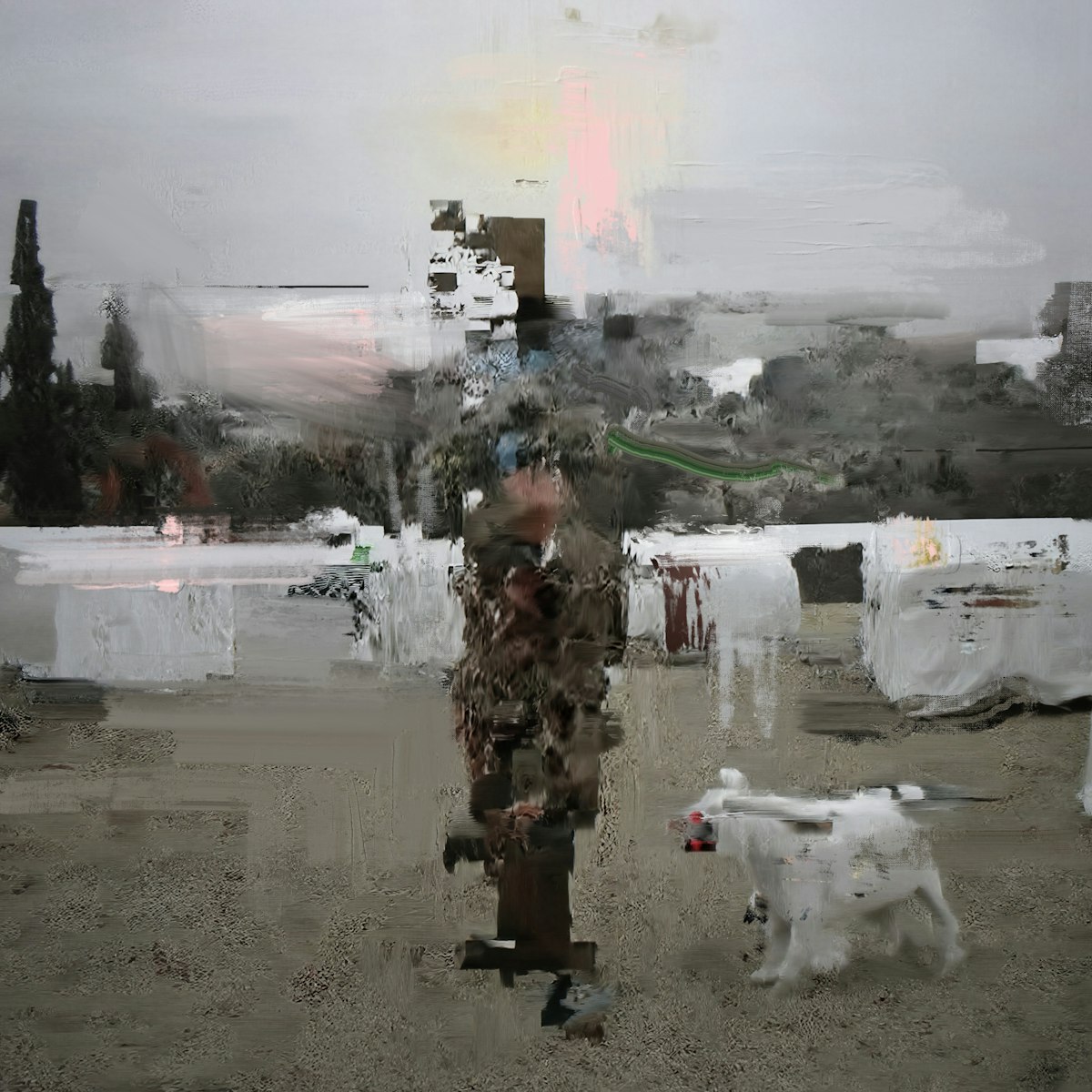
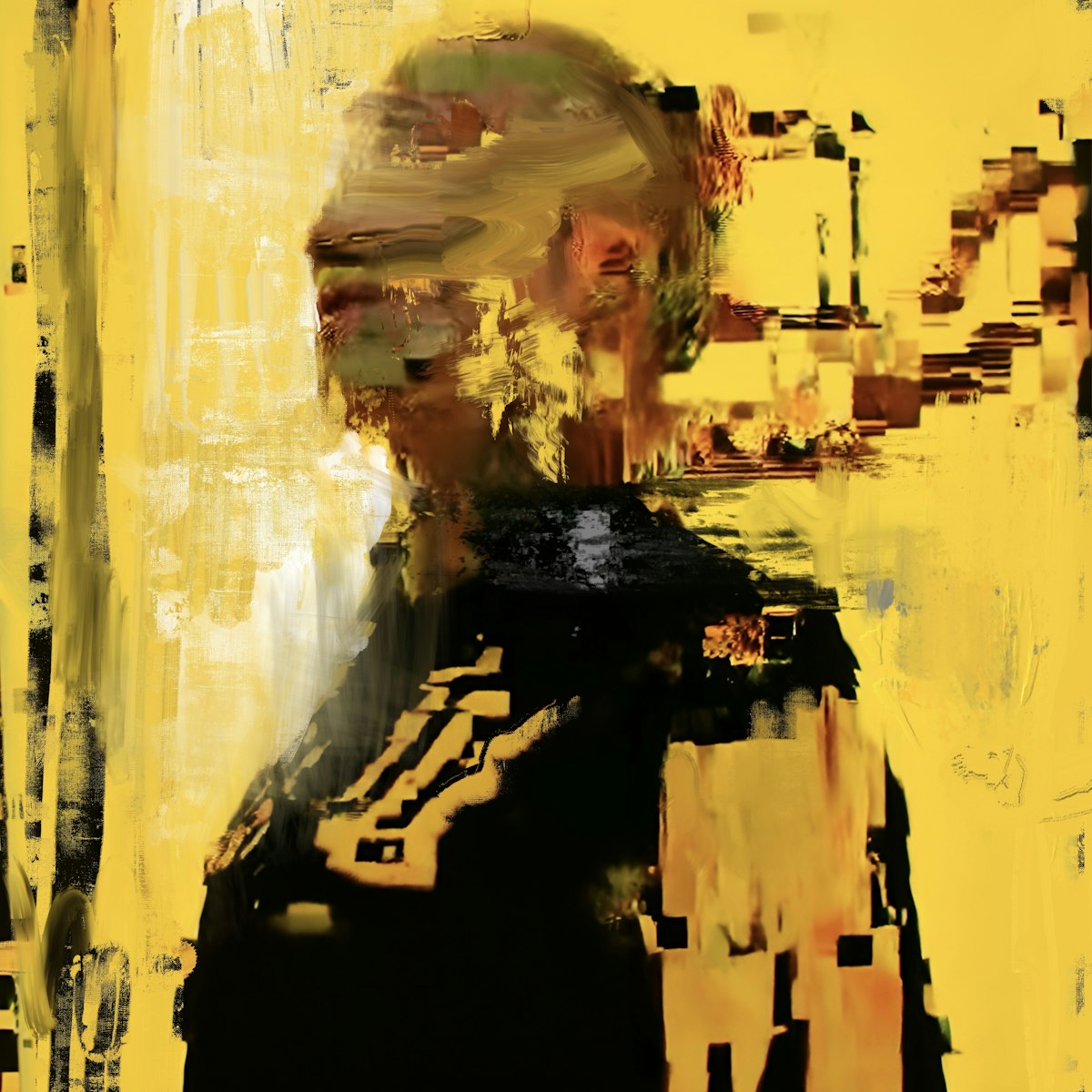
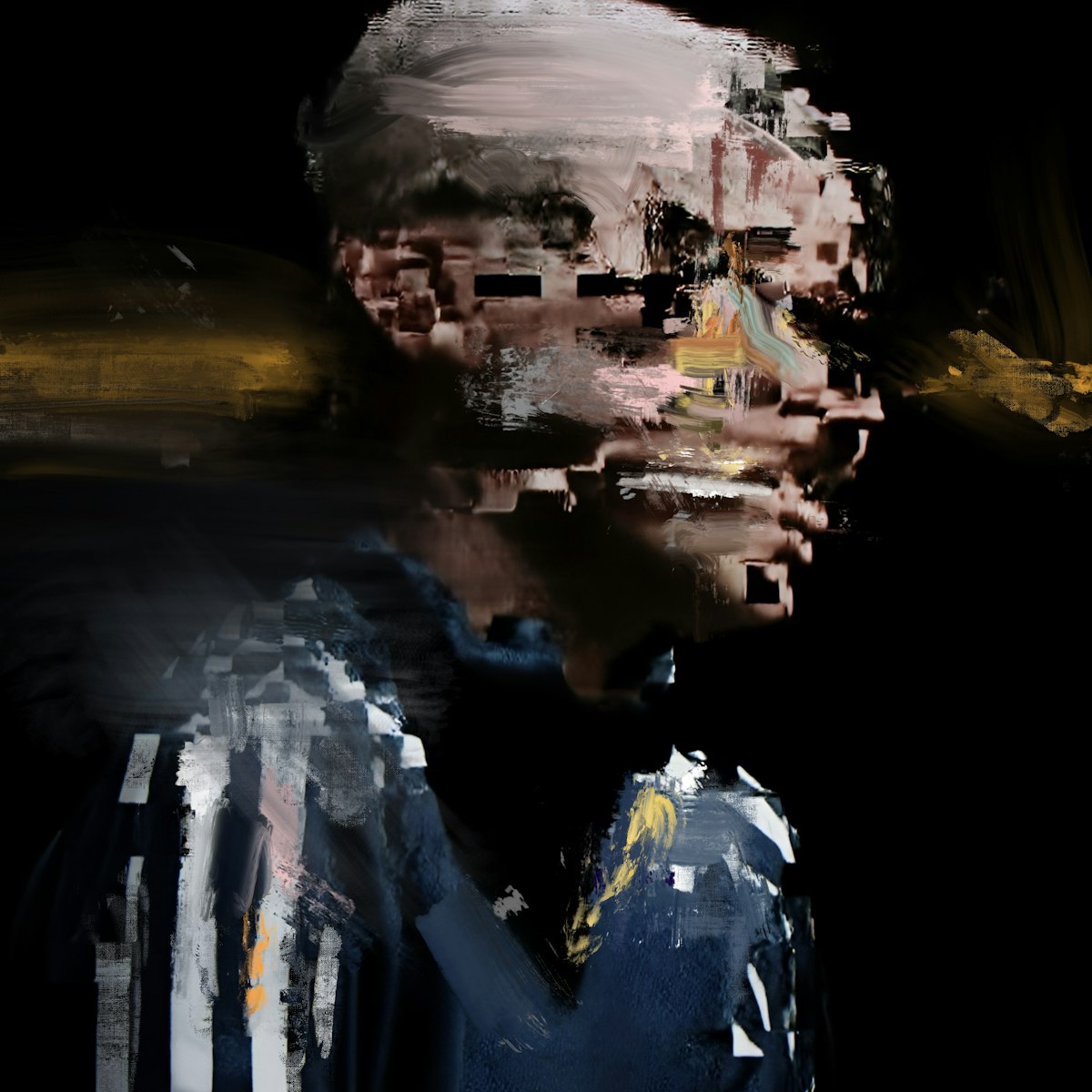
ANDROID PLAZA — OIL
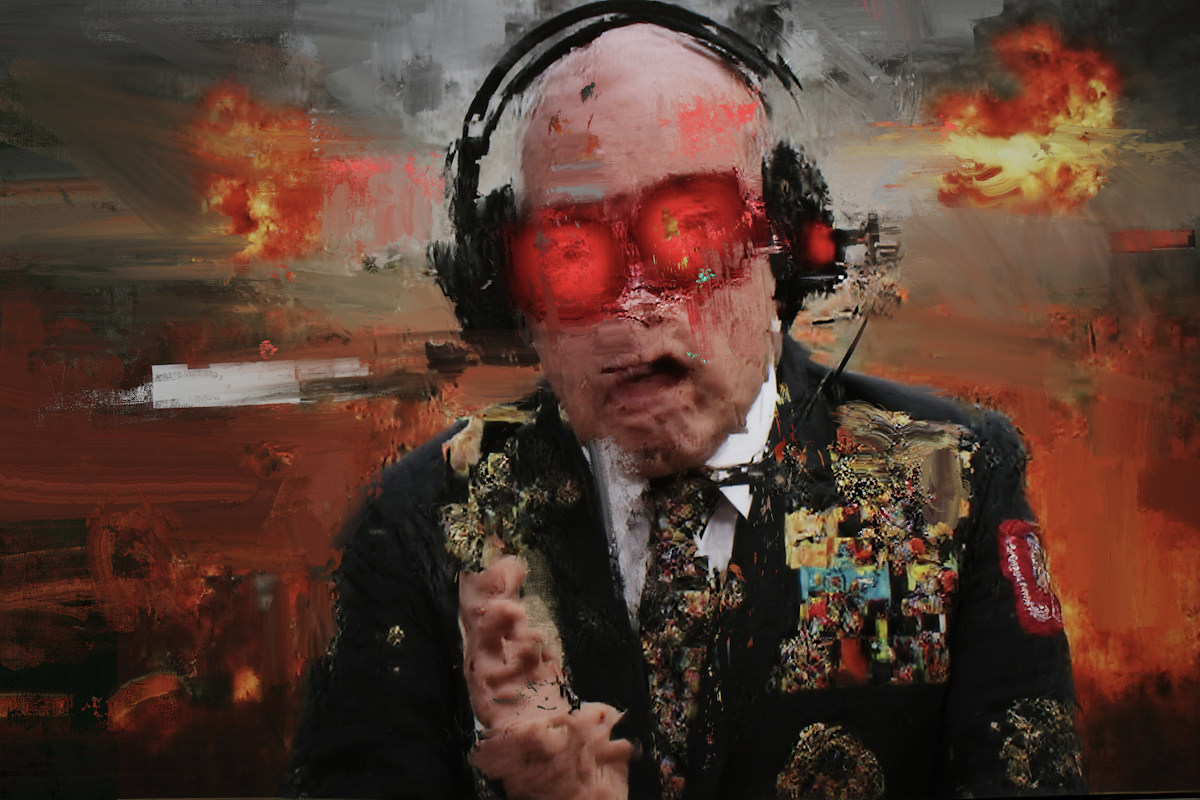
The bureaucrat remains, but only as outline, an echo of authority still performing itself.
What defines him now is oil.
Not as image, not as painterly flourish, but as the true medium of the world he inhabits. It rises to the surface of the face like a final truth, thick and unarguable. This is the substance that has shaped decisions, justified invasions, sustained empires, now no longer hidden in policy or distance, but made immediate, intimate, unavoidable.
In Android Plaza, the image has already been broken open. The algorithm strips the figure of coherence, fractures the flag, dissolves the illusion of unity. What steps forward into that rupture is not clarity, but the real architecture beneath it all.
Oil fills the vacuum.
It doesn’t corrupt the bureaucrat, it reveals him. His role was never to think, or to feel, but to channel, to administer, to give form to a force that precedes him. The face becomes a site where this force declares itself, where America’s long entanglement with extraction is no longer abstract or geopolitical, but physical.
The flag behind him falters, reduced to a trembling backdrop. Nationhood becomes secondary, almost decorative, beside the density of what now defines the figure. Oil carries more weight than symbol. It does not need belief.
There’s no resistance here, no sense of tragedy, only continuation. The bureaucrat still stands, still faces forward, but whatever interior life once existed has been replaced by a darker continuity, something older, slower, and far more certain.
OIL - Android Plaza
OIL is not about power in the usual sense,
it is about what power ultimately serves,
and what it leaves behind on the face.