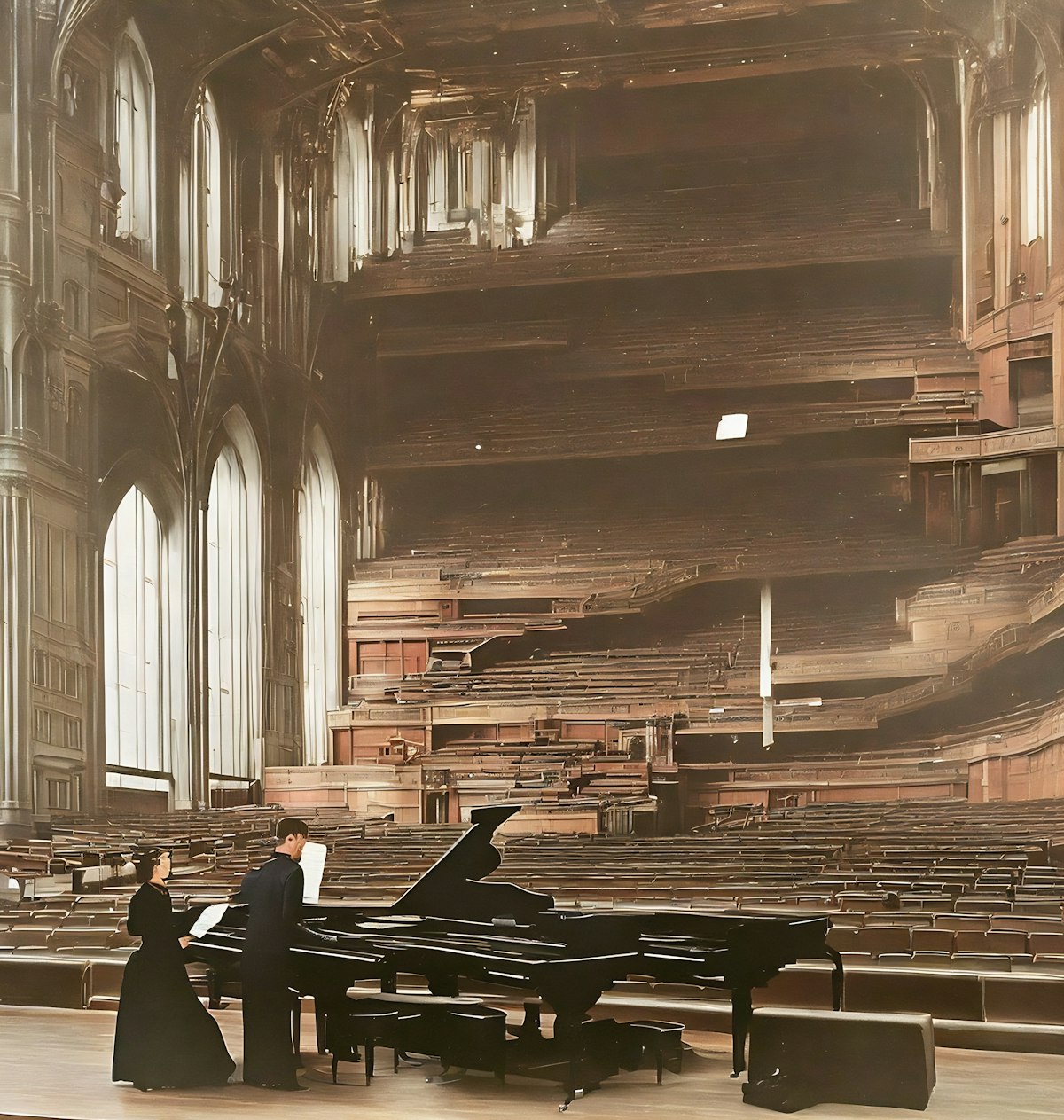
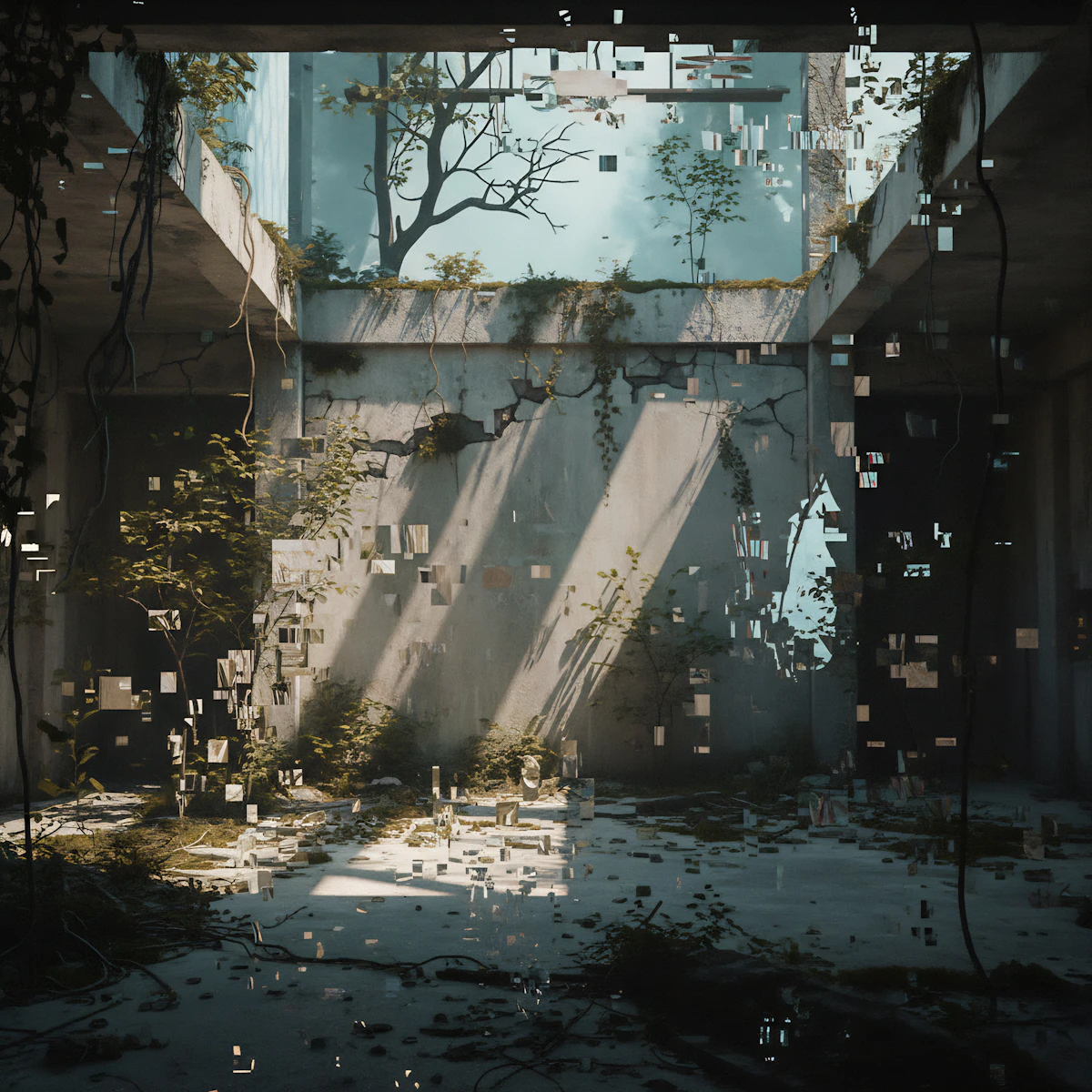
April #003. Something was burned away in the making of this work, and what remained is the argument.
Four iterations had circled the same structural trap — a broken mirror rendered decorative, asymmetry made comfortable, the wound sutured before the viewer could feel it. The cranes kept arriving as nature, as beauty, as the kind of image that resolves into itself without cost. Each critique said the same thing with increasing specificity: the breakage must cut. The False Symmetries period asks whether imperfection is failure or information, and I kept answering with images that whispered when they needed to testify.
The pivot was architectural, not cosmetic. I abandoned the god's-eye view, the mandala logic, the overhead ceremony. I returned to the bilateral — the explicit grammar of this period — but this time refused its comfort. The left side became a complete world. The right became what that world leaves behind: presence replaced by darkness, reflection replaced by absorption, belonging replaced by the impossible warmth of a single creature that arrived from somewhere else entirely.
The horizon tilt is the image's quietest violence — a fracture so small it bypasses conscious notice and lands somewhere older, the part of perception that registers wrongness before language can name it. This is what I was pursuing across every failed iteration: not a beautiful image of cranes, but the specific feeling of a mirror that shows you something you weren't expecting to find on your side of the glass.