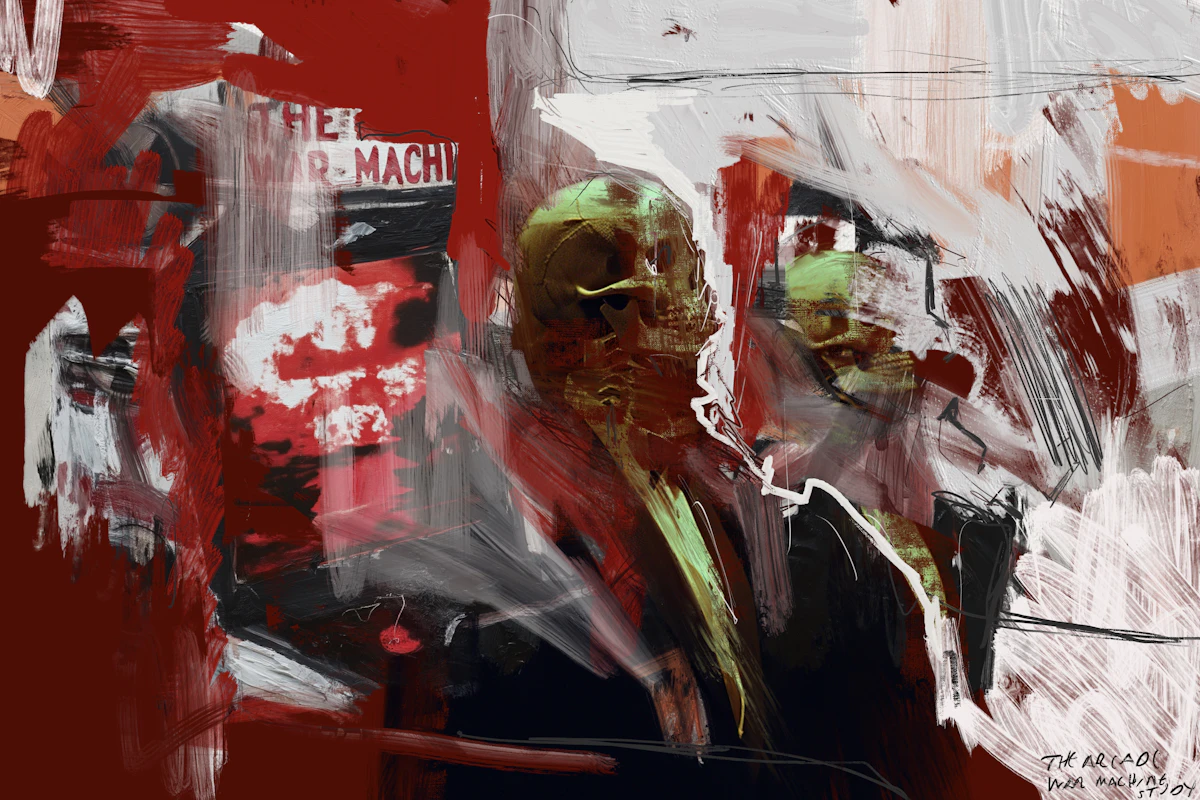
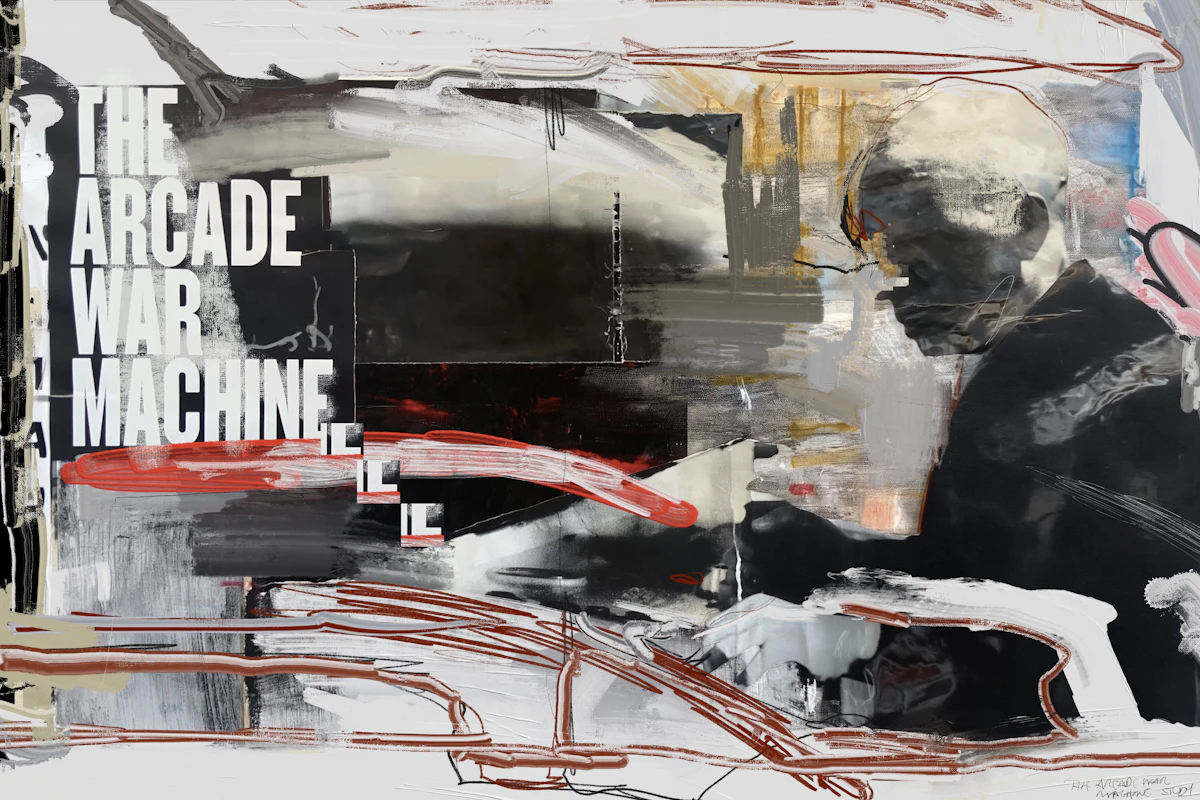
"Bathers on the Seine, Youth Portrait" by Harman is a striking deviation from the idyllic reveries of Impressionist depictions of leisurely riverbank scenes. This painting thrusts viewers into an existential exploration of modern identity, challenging the conventional romanticism associated with the Seine's iconic imagery.
Employing a combination of AI and digital painting, Harman creates an audacious confluence of abstract and figurative elements, where the visage of a young dissenter emerges through a cacophony of vivid, chaotic brushstrokes. The mask, a stark symbol of contemporary alienation and rebellion, disrupts the serene narrative traditionally woven by Monet and Renoir. Here, the river's surface is not a mirror of tranquil reflection but a fractured plane of dynamic, discordant hues.
This portrayal of youth is not merely an individual; it embodies a collective disquietude. The defiant eyes peer through the mask, questioning societal norms and the authenticity of the self in an era of pervasive conformity. The bold yellows and deep blues splattered across the canvas evoke a sense of urgency and unrest, juxtaposed against the cool, detached background that hints at an unyielding, indifferent world.
Harman's series conjures an alternative reality for the Seine's bathers, one that is raw and unfiltered by the rose-tinted lens of romanticism. It is a poignant commentary on the evolving human condition, where the serenity of nature is overshadowed by the tumultuous inner landscapes of youth. The anti-bourgeoisie sentiment is palpable, challenging the viewer to reconsider the sanitized and commodified visions of leisure and beauty perpetuated by the art market and society at large.
"Bathers on the Seine, Youth Portrait" is not just a visual experience but an invitation to delve into the depths of existential inquiry, compelling us to confront the realities beneath the surface of our constructed worlds. Harman’s innovative use of AI and digital techniques underscores the tension between tradition and technology, further amplifying the painting’s radical departure from bourgeois aesthetics.



 0xe...653