
- Editorial
James Fox: Beautifying an Unavoidable Darkness
Editorial is open for submissions: editorial@superrare.com
by luxpris
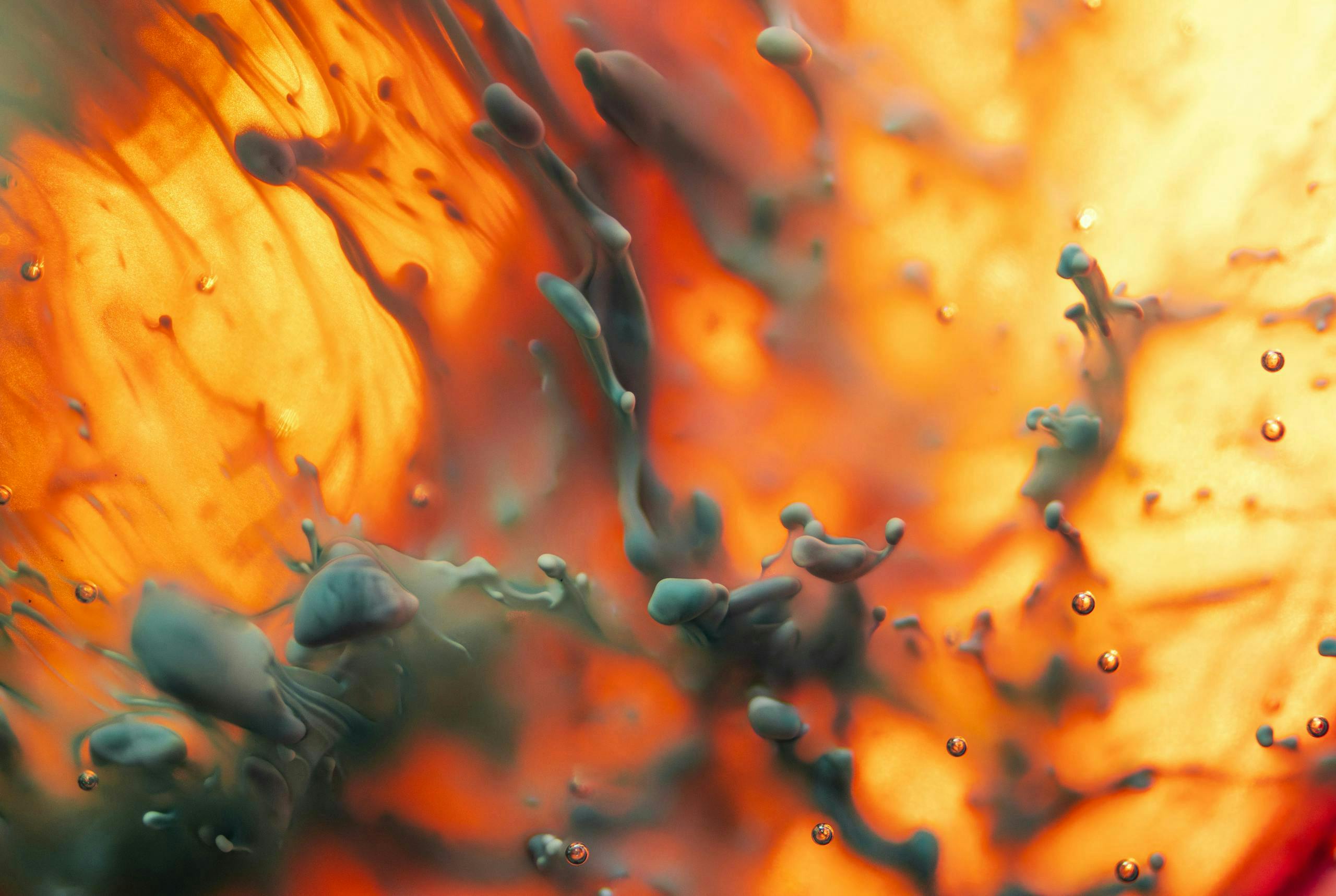
James Fox is a macro photographer who invites viewers into small, beautiful places with vivid and emotional abstract photography. James specializes in using flowing pigments to create intricate and atmospheric pieces that the viewer may immerse themselves in and reflect on the art and beauty of small things.

Tell me about your development as a photographer. Have you always been drawn to macro photography or was this an interest that developed slowly over time?
It wasn’t until my first winter shooting that I realized how much I loved shooting macro. I can remember very clearly this one day, years ago, I wanted to go out and shoot but it was so, so cold.
I grabbed a macro lens out of my camera bag that I hadn’t used much and just started shooting everything in the house, looking for ways to shoot ordinary objects in an artistic and interesting way.
Hours flew by and I think I drained three of my batteries in a row, and I remember feeling like, “Yeah, I’m going to be a macro photographer.”
When I first saw your work without context, I assumed you were using some sort of 3D modelling software. It didn’t even occur to me that these pieces were photographs. What does your workflow look like? Do you do much post-processing on your images?
My workflow ranges across a spectrum from relaxed and experimental to fairly meticulous. A lot of shots I take are not planned per say, but the results of me experimenting and having fun.
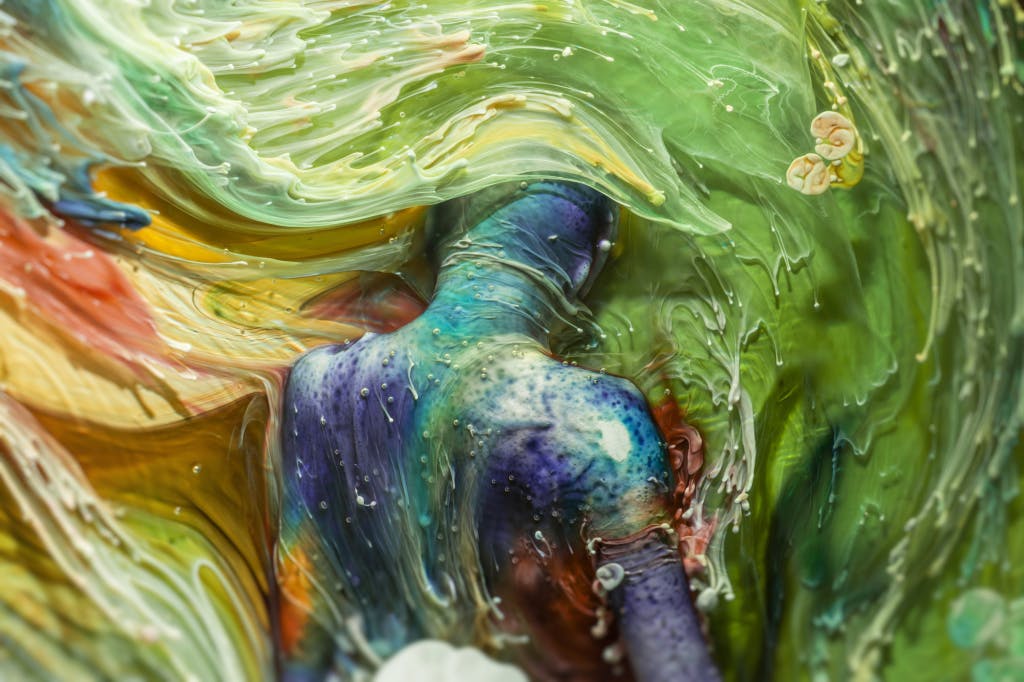
The pieces that I shoot for SuperRare though take quite a bit of planning and oftentimes, multiple attempts until I get the desired result. I will usually start with some thumbnails or concept sketches, just so I can get the image out of my head and on to paper so I can decide if it’s going to work or not. I will then start modeling the subject I plan to shoot with 3D software and then print it out with a resin 3D printer so I can have a subject to interact with the flowing pigments I shoot with.
Because I shoot with resins, I don’t get the result on the first go, if it doesn’t work I have to scrap it and start again. It is always a little nerve-racking, but exciting at the same time. I have a good estimate of how the shot will turn out, but because of the nature of the flowing pigments, there is always an element of surprise which I find very satisfying.
I don’t do a ton of post processing, but because of the nature of shooting macro, you can often pick up little bits of debris in the shot that are otherwise unnoticeable to the naked eye, and that needs to be touched up.
Besides that, I will usually do some minor adjustments to levels, color correction and cropping if necessary. I try to avoid too much post processing because the more I want the spirit of the shots I’ve captured to be as intact as possible.
In the description for “Nos Umbra,” you write about “an appreciation for the parts of ourselves that we prefer to keep hidden.” I think this resonates thematically with a lot of your work since–when you do base the composition of a photo around a model–they’re often ensconced in debris or the aforementioned pigments. Is this purely for aesthetic reasons or is this an idea that resonates with you conceptually? If so, what draws you to this theme?
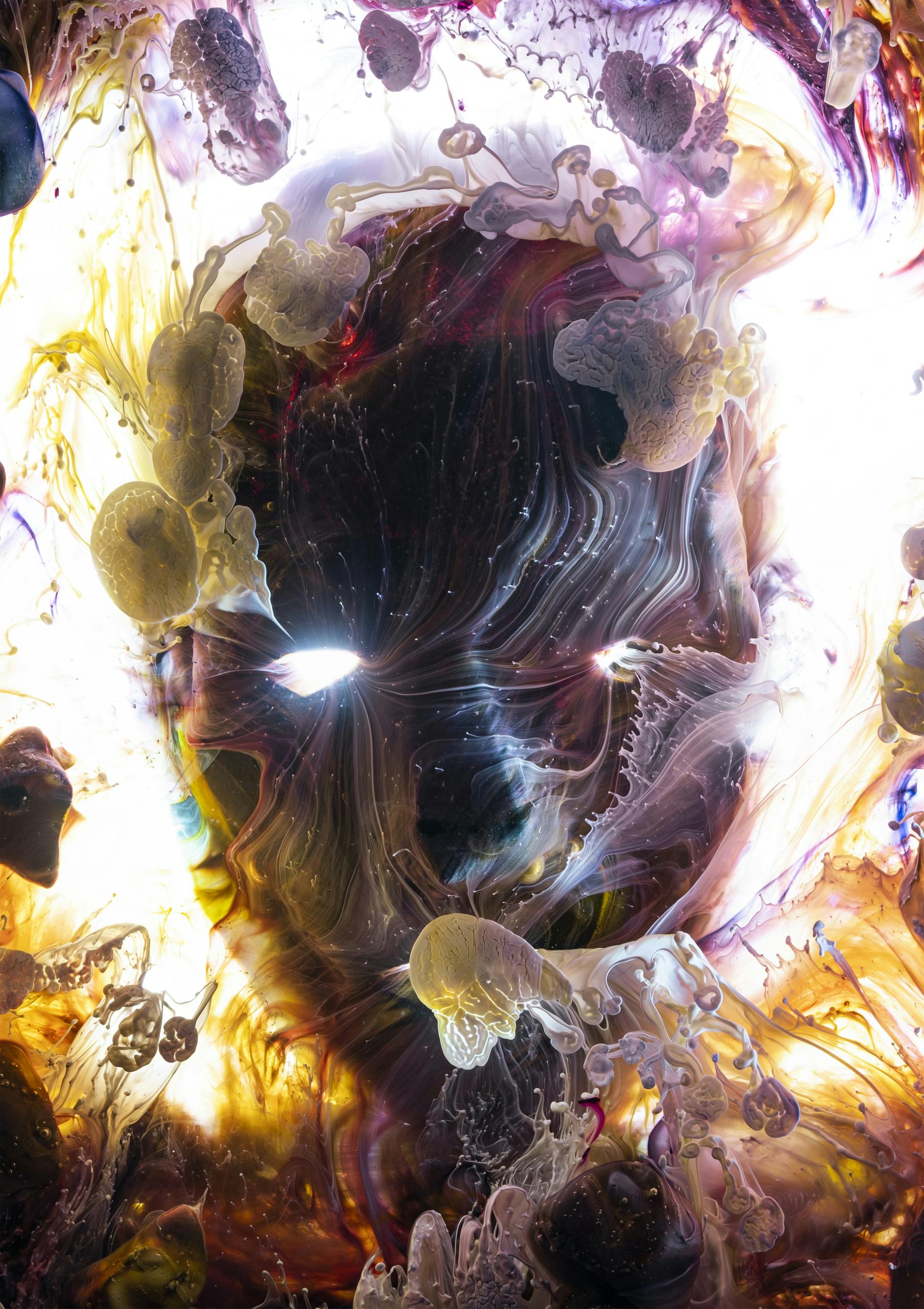
Originally I started using the flowing pigment technique for purely aesthetic reasons. In fact, when I first started shooting that way, all the shots were completely abstract with little to no relatable imagery.
As I began to explore that technique I realized that I could utilize it to shoot more recognizable imagery and themes to render them in an abstract way. Nos Umbra for instance, is recognizable as a face, but it is rendered in a surreal and abstract way that lends to the theme of there being something in ourselves that we overlook, or find hard to examine. I wanted to render the darker side of us in a way that was somewhat beautiful so that we can take a little step of having an appreciation for all of the things that make us who we are, not just the things about ourselves that we find pleasant. That wasn’t the original intention when I started on that piece, but something that I arrived at while creating it, and it felt very genuine.
As the name would imply, your piece “Beksiński Dreams” pays tribute to Zdzisław Beksiński. I’m not surprised you’re influenced by his work, because I see dark surrealism in not only that piece, but others like “Creatio Certamen”, “Ethereum Infantem”, and “Mente Insana”. Do you find yourself more strongly inspired by darker work? Who are some other artists you appreciate?
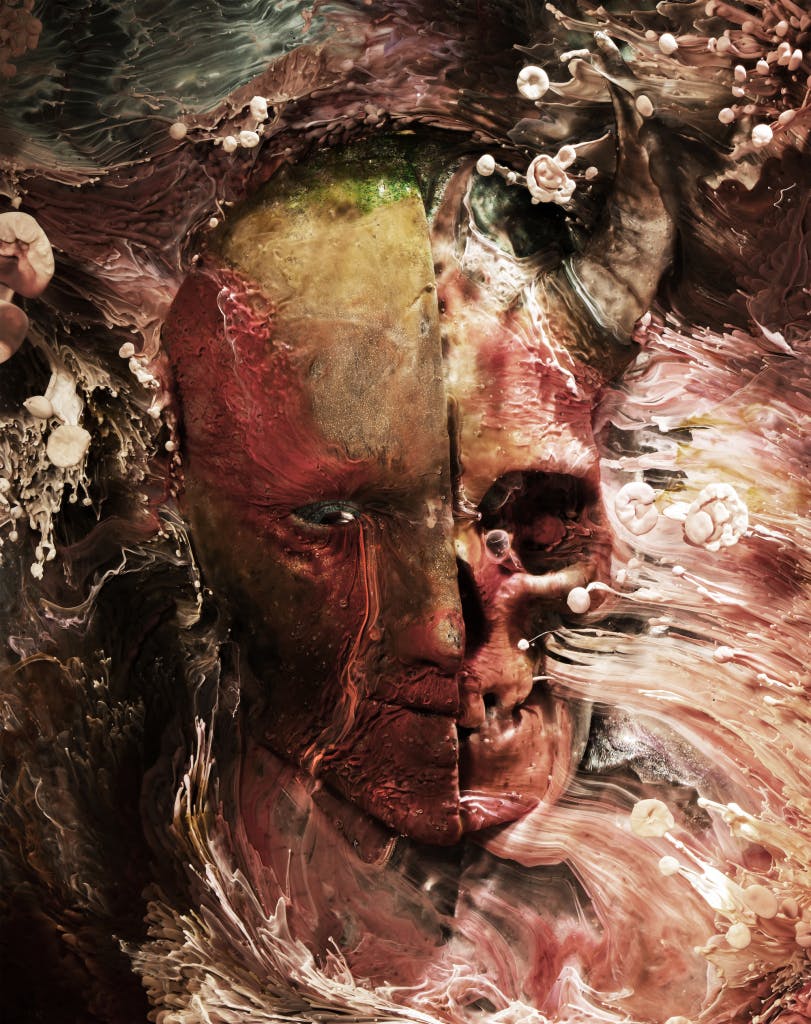
I think it’s fair to say that I’m more inspired by darker work, it just seems to hook me more effectively. I live a pretty chill and pleasant life, I don’t feel a lot of darkness in my day to day life, so when I see darker art it’s kind of like a palette cleanser from my usual state of mind, and it’s that kind of contrast that I think is very important for experiencing and creating art. It’s good to go to the dark places sometimes, because the soil is so fertile for creativity, it jolts you awake and opens your mind to other possibilities. Besides, darkness is an unavoidable part of life, it’s just as important as anything else and if I were to try to avoid it, I don’t believe I would be able to create my art in an honest way.
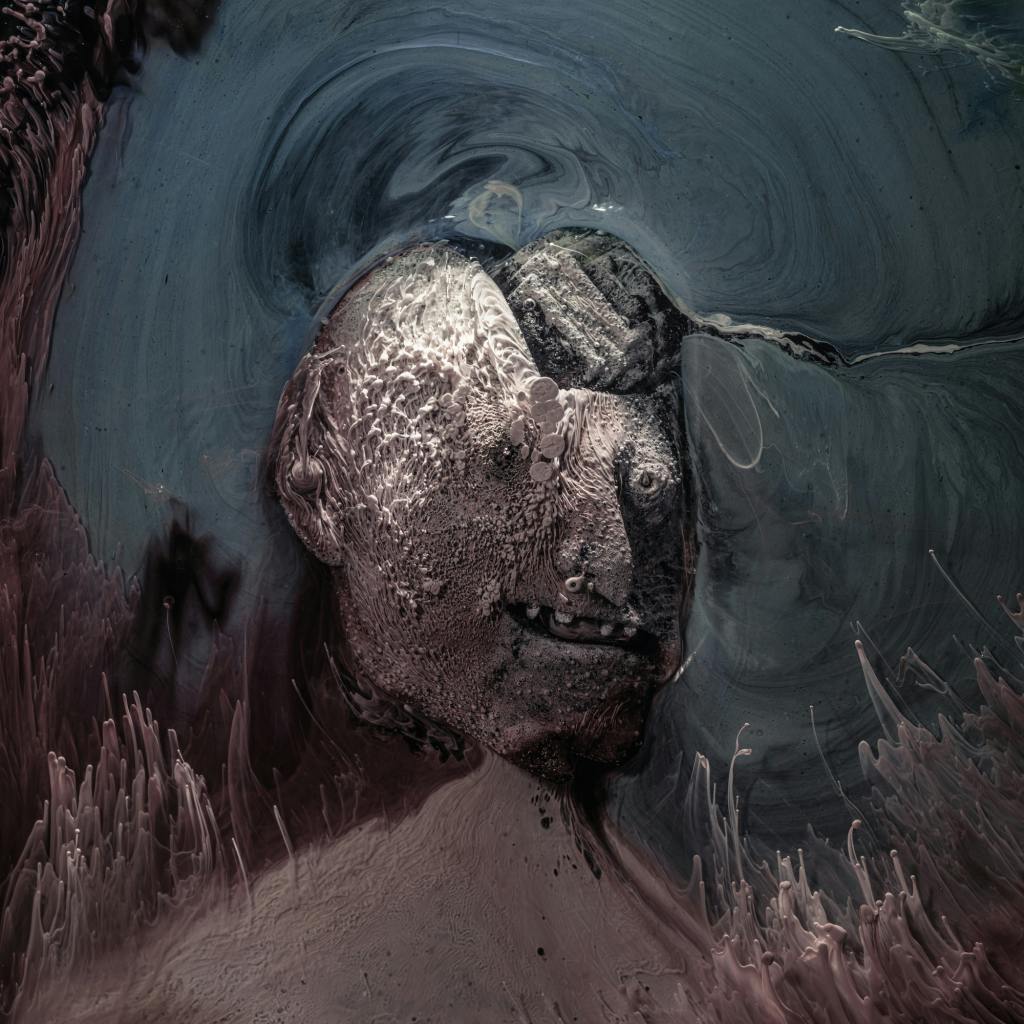
As for other artists I appreciate, the ones that spring to mind would be Francis Bacon and Salvador Dali. They both rendered their work quite differently but they could each pull you into their works masterfully.
I see a lot of different kinds of juxtaposition playing out in your work. There are paired series that riff on lunar and solar imagery, and works like “Ignis Aqua” where you pair oppositional elements like fire and water. I also don’t think it’s uncommon for you to riff on dark subject matter (like death and disease in “Laetus Muertos” and “Covid Morbus”) and drench your subjects in bright colors that can almost be interpreted as celebratory or joyous. Why do you suppose these oppositions appear in your work?
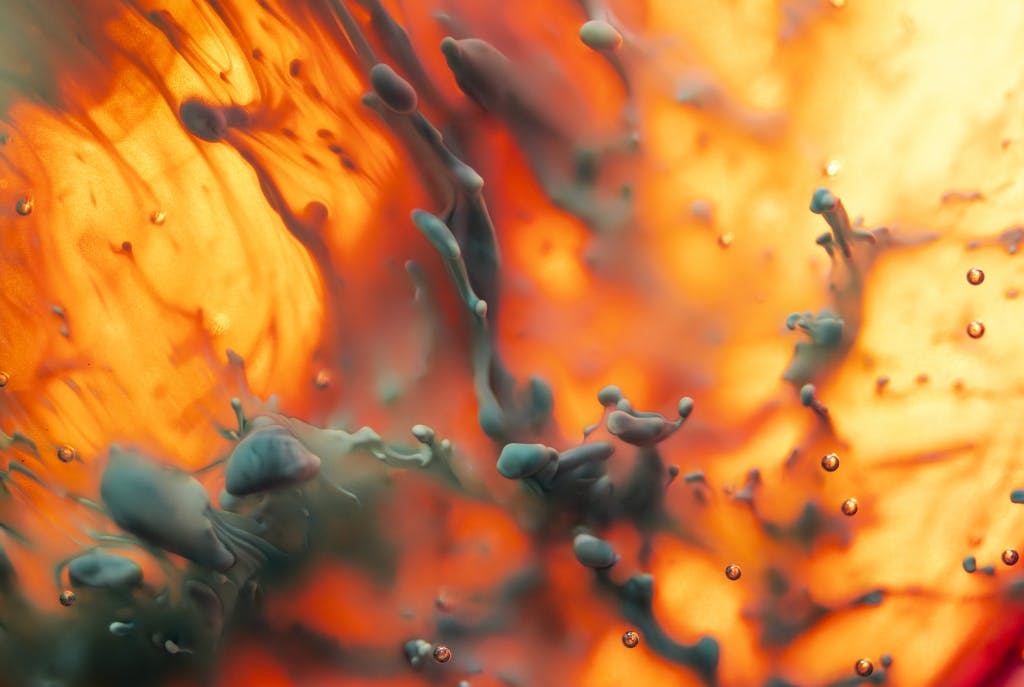
I like to use those juxtapositions to let the viewer find their own place in my work. If I can portray a contrast between a light and dark side in a piece–or two opposing ideas–then I think a connection is made with the viewer when they might see that those two sides or ideas make up a whole or figure out where they settle between those two sides. Also, it’s practicing a way of seeing things in less conclusive terms. Instead of proclaiming good is good and bad is bad, I try to explore the balance in the two sides that make up the same coin.
With the year coming to a close, what are you most proud of attaining in your recent output? What do you plan on exploring in 2021?
I think the thing that I’m most proud of is easing into a mindset where first and foremost, I’m being honest when I create something. Even if I feel like creating something silly, I don’t worry as much anymore on how well it will be received.
Of course, I really want people to like my work and connect with it, but I’m proud that I’m much more honest and genuine with my creativity now, even if it seems to want to go in strange directions.
As for upcoming plans for 2021, I am going to really push my own boundaries for what I’m able to create both technically and thematically. I have a rough outline for a very complex piece that will probably take a month or two to complete, but I’m very excited to work on. I also have a sketch book filled to the brim with a lot of really interesting ideas that I would love to see realized, so I am pretty comfortable saying that I’ll be putting out some interesting pieces. That being said, I’ll go where the creative wind blows and I’m really looking forward to it.