Plein Air Painters - The Unfinished Republic
Post-painting
Circa 2026
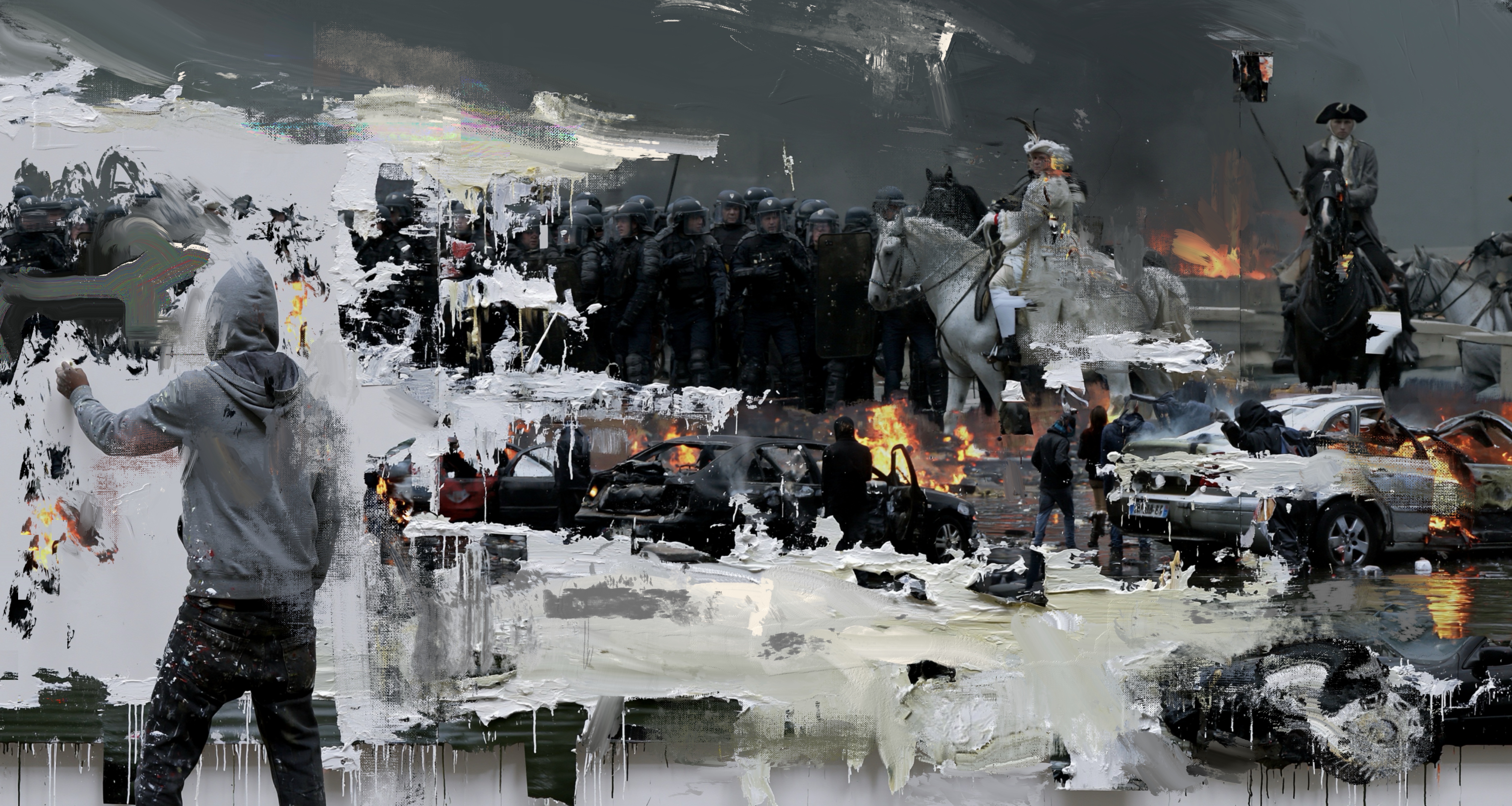
On the banks of the Seine, the celebrated French tradition of painting en plein air is transformed into an unlikely theatre of political and artistic dissent. A group of young painters, dressed in the everyday clothing of contemporary urban life, confronts the theatrical reappearance of eighteenth-century aristocracy. Mounted courtiers materialise across monumental canvases, while the familiar Parisian riverside becomes a meeting ground between competing centuries, cultural identities and visions of freedom.
The painting revisits the radical origins of Impressionism, when painting outdoors represented a departure from the conventions and institutional authority of the Academy. Yet here, the pursuit of natural light and fleeting atmosphere gives way to a more contentious exercise: the reconstruction of history itself. The young artists are neither passive observers nor conventional revolutionaries. Their intervention is cultural, undertaken through the simple but potentially subversive act of making images beyond the sanctioned spaces of artistic authority.
Expansive areas of grey and white pigment obscure the city, while digital fragmentation interrupts the distinction between painted surface and observed reality. The apparent incompleteness of the composition becomes central to its meaning. Like the republic itself, the image remains unresolved, subject to continual revision, contradiction and the competing demands of those who inhabit it.
The Unfinished Republic ultimately considers artistic freedom as an unfinished political project. The Seine, once the setting for Impressionism's celebration of modern life, becomes a landscape in which the promises of equality, liberty and cultural independence remain open to negotiation.