Plein Air Painters - The Triumph of the Unworthy
Post-painting
Circa 2026
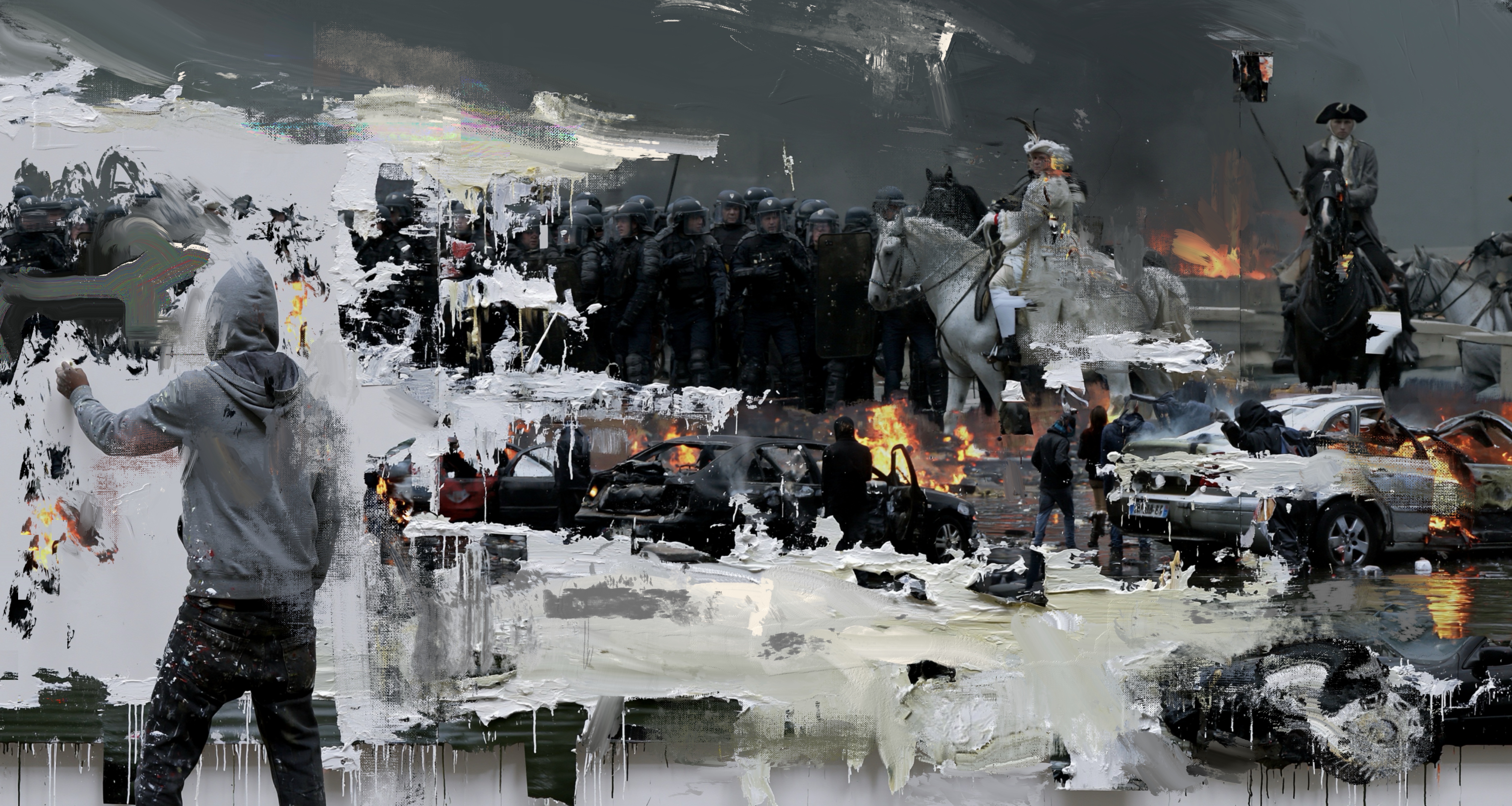
An extraordinary procession of aristocratic carriages advances across a Parisian bridge beneath a sky darkened by an approaching catastrophe. Horses, courtiers and ceremonial vehicles form an elaborate spectacle of inherited authority, their magnificent procession unfolding above a contemporary landscape of fire, debris and apparent social collapse. Beneath the bridge, a group of young painters works before monumental canvases, seemingly indifferent to the extravagant pageantry passing overhead.
The painting stages an encounter between two competing forms of cultural power: the authority of those who have historically commissioned, possessed and controlled images, and the creative independence of those who produce them. The aristocratic procession becomes an almost comical demonstration of privilege, its participants continuing their ceremonial display as the world beneath them threatens to disintegrate. Their grandeur is inseparable from its absurdity, recalling the historical tendency of ruling classes to mistake the persistence of their own rituals for the endurance of civilisation.
Dark, turbulent passages of pigment consume the sky, while the foreground dissolves into layers of distressed imagery, aggressive brushwork and fractured surfaces. The instability of the painting mirrors the instability of the social order it depicts. History is presented not as a fixed monument to achievement but as an accumulation of contested narratives, frequently constructed in the interests of those occupying its most advantageous positions.
Yet the work's central irony lies in the relationship between its protagonists. The aristocrats command the bridge, the procession and the spectacle, but the painters command the image. In this reversal, The Triumph of the Unworthy becomes a satire of cultural legitimacy itself, questioning whether authority is earned through intellectual or creative achievement, or simply inherited, purchased and ceremoniously maintained.
The procession may continue indefinitely, but its historical significance now rests in the hands of those standing beneath it.