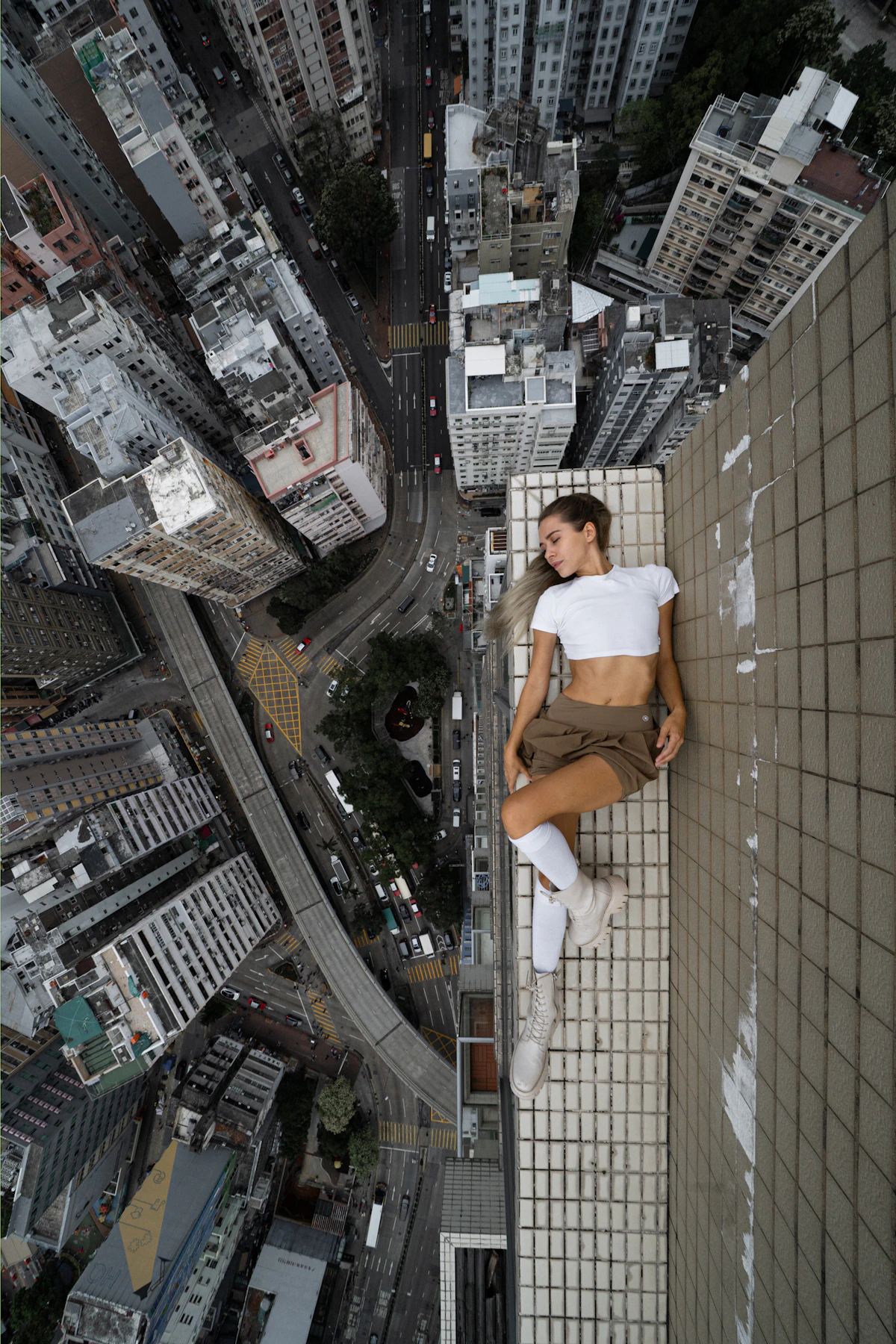
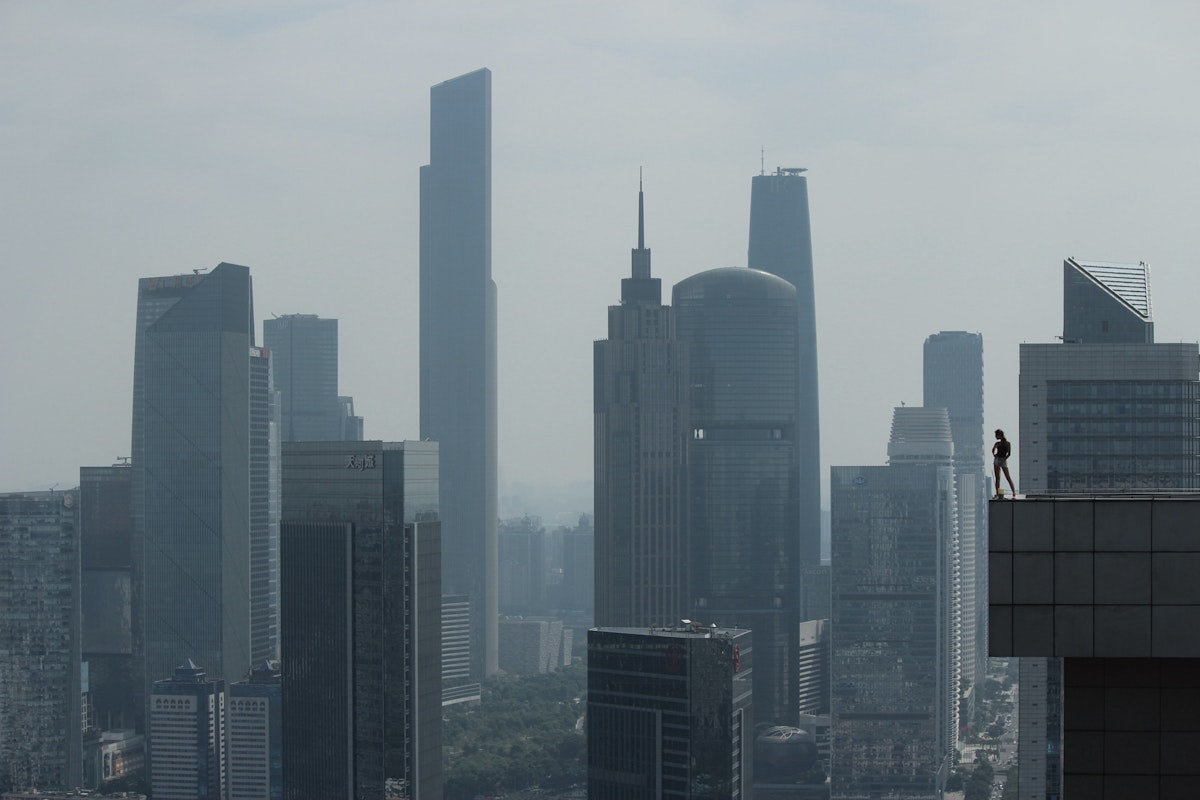
In 2070, Angela turns to the aesthetic of a future imagined in the past. Her heroine finds herself inside a visual myth of the city: concrete, metal, glass, and the gravitational severity of form evoke echoes of modernist and metabolist movements—architectural languages that once promised humanity a different tomorrow.
These buildings are not just utopias — they are temporal ruptures. Their linearity, massiveness, and almost alien detachment become a backdrop for an internal dialogue: Who am I in this future that never arrived, yet still surrounds me?