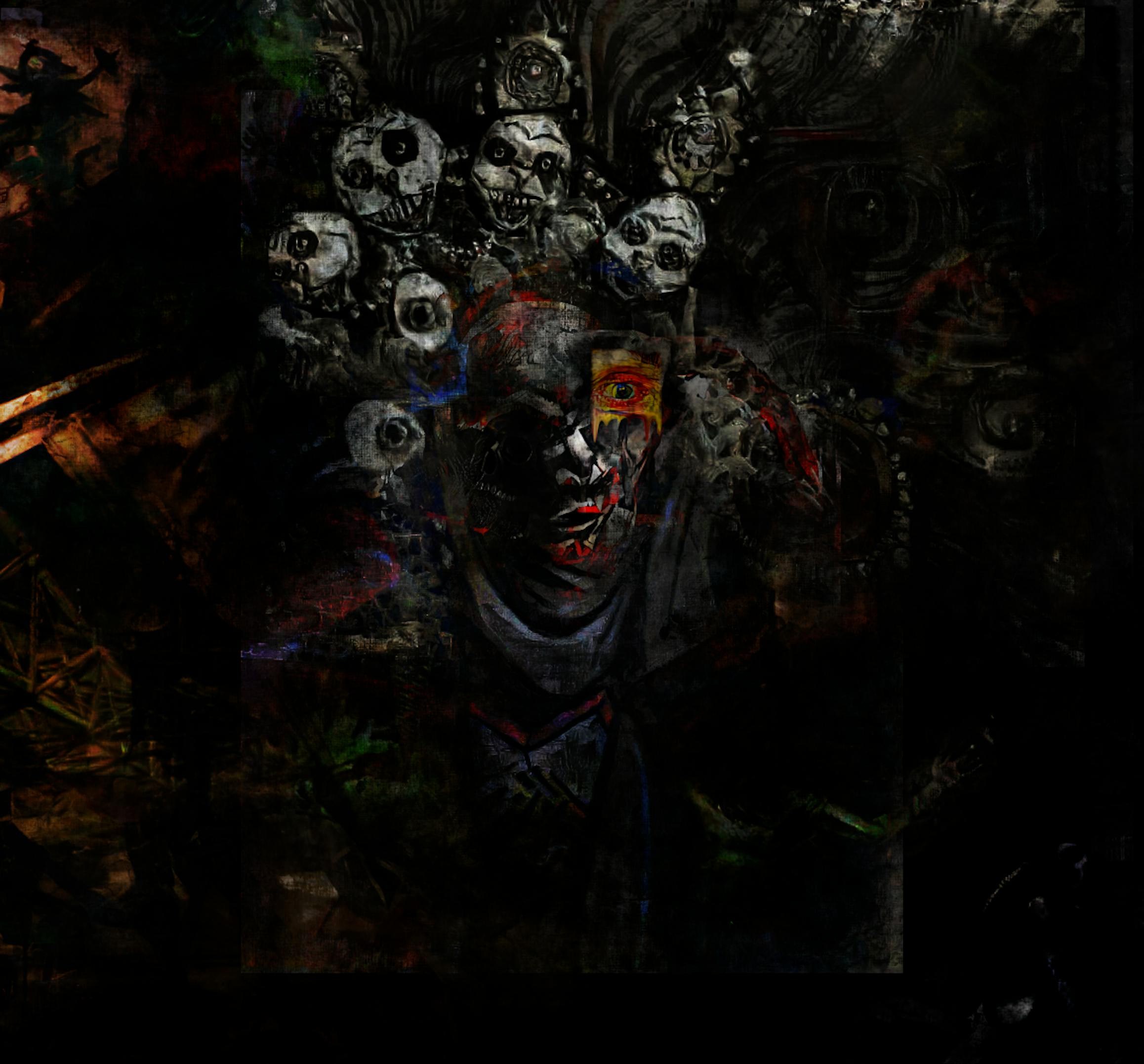
The first panel in a large-scale triptych, "Phosphorus" presents a world fraying at the edges with conflagration. It is the world as it is now, balanced over environmental precipices from which there is no recovery.
As a series, the triptych, comprised of "Phosphorus" as well as "Venus" and "Hesperus," considers this narrative as unfolding through a menacingly surreal landscape of wreckage, fire, and flood which characterize the Neo-Apocalyptic movement of climate change art . Modeled after the three-panel altarpieces of Ductch and Italian Old Masters, and drawing from traditions of apocalyptic imagery varying from Hieronymus Bosch to glacial breakdown predictions, "Landscape for Drowning" accordingly charts a nightmarish future of climate catastrophe and civilizational annihilation.