High above the mortal realm, in the celestial expanse where eternity unfolds,
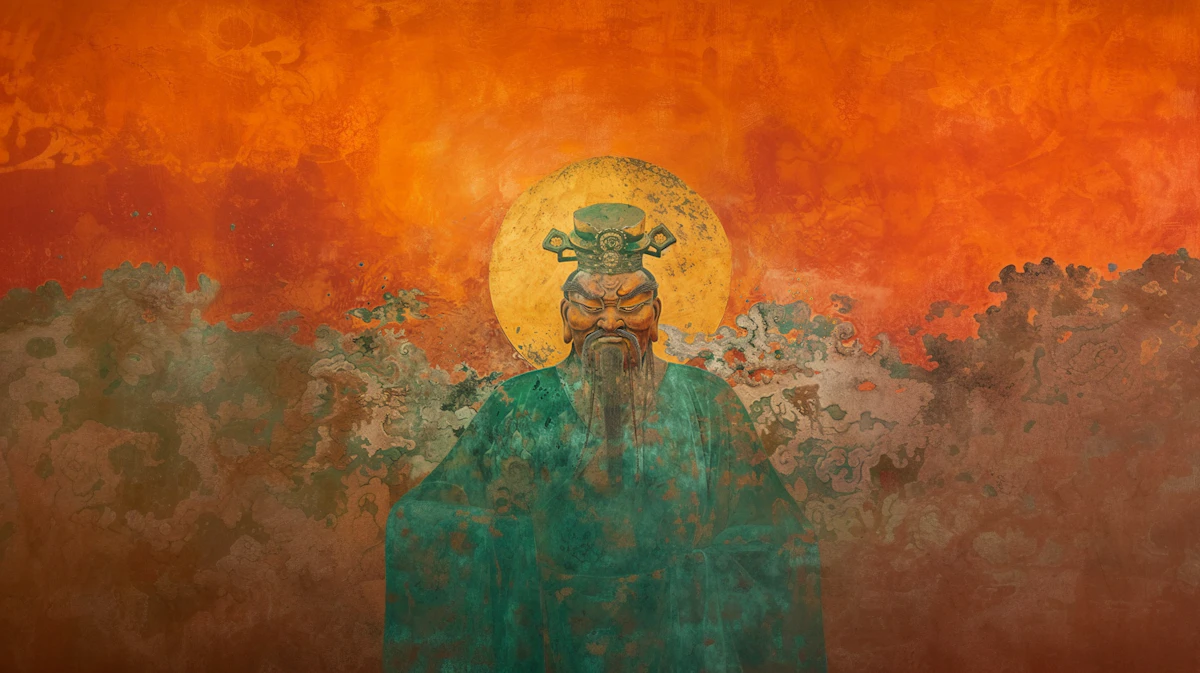
sits the Jade Emperor, the august sovereign of the heavens.
Enthroned within the Jade Palace, his domain is a panorama of harmony and divine order,
a realm where the stars align to his will.
The Jade Emperor, revered as the supreme deity in Taoism and a significant figure in Chinese folk religion, symbolizes celestial authority and cosmic harmony. As "Yu Huang" or "Yu Di," he governs over Heaven and all earthly and infernal domains, ensuring universal order. Originally a mortal who achieved divinity through virtuous living and meditation, he represents the Taoist ideal of harmony and perfection. Despite his historical significance and role in cultural celebrations like the Chinese New Year, where he is honored for prosperity and protection, the Jade Emperor's active worship has diminished in contemporary China under Communist rule. The secular government's promotion of atheism and its cautious approach towards religious practices have led to a more private and less visible veneration of traditional deities, including the Jade Emperor. While still a figure of cultural importance, his public worship is not as prevalent due to the state's emphasis on secularism and the control over religious expression.