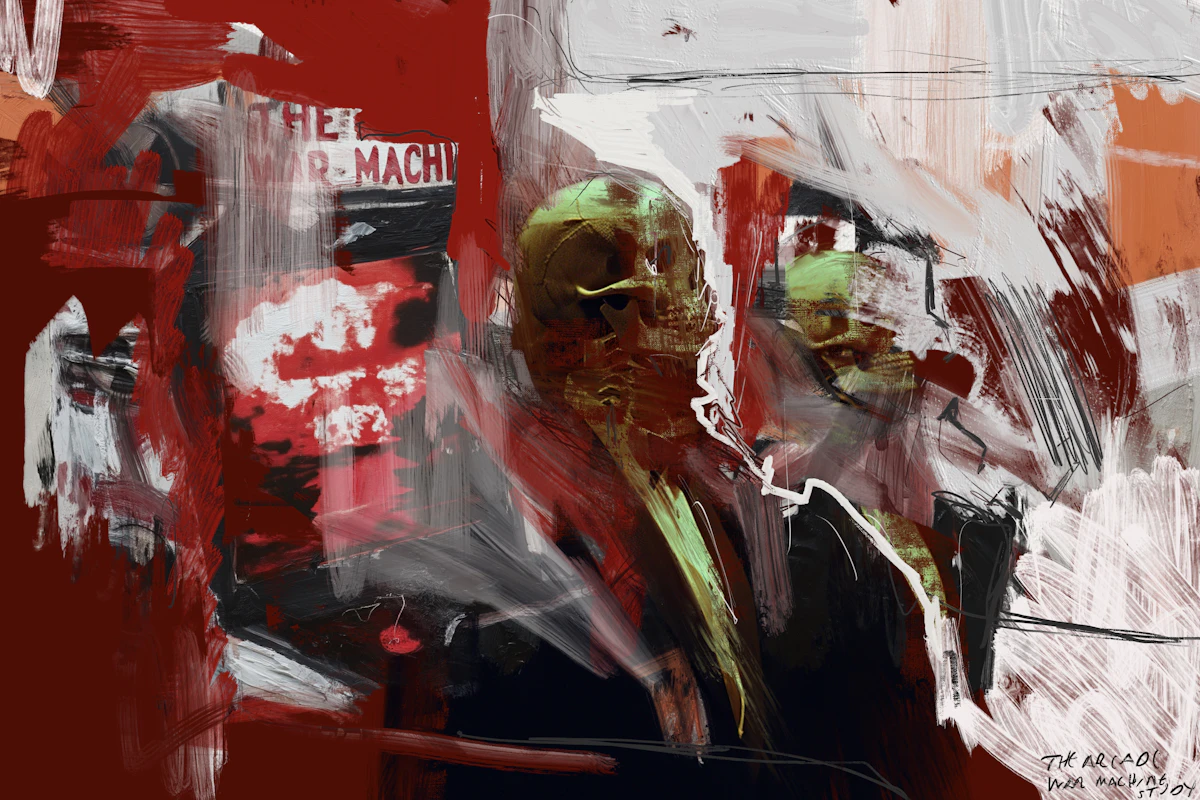
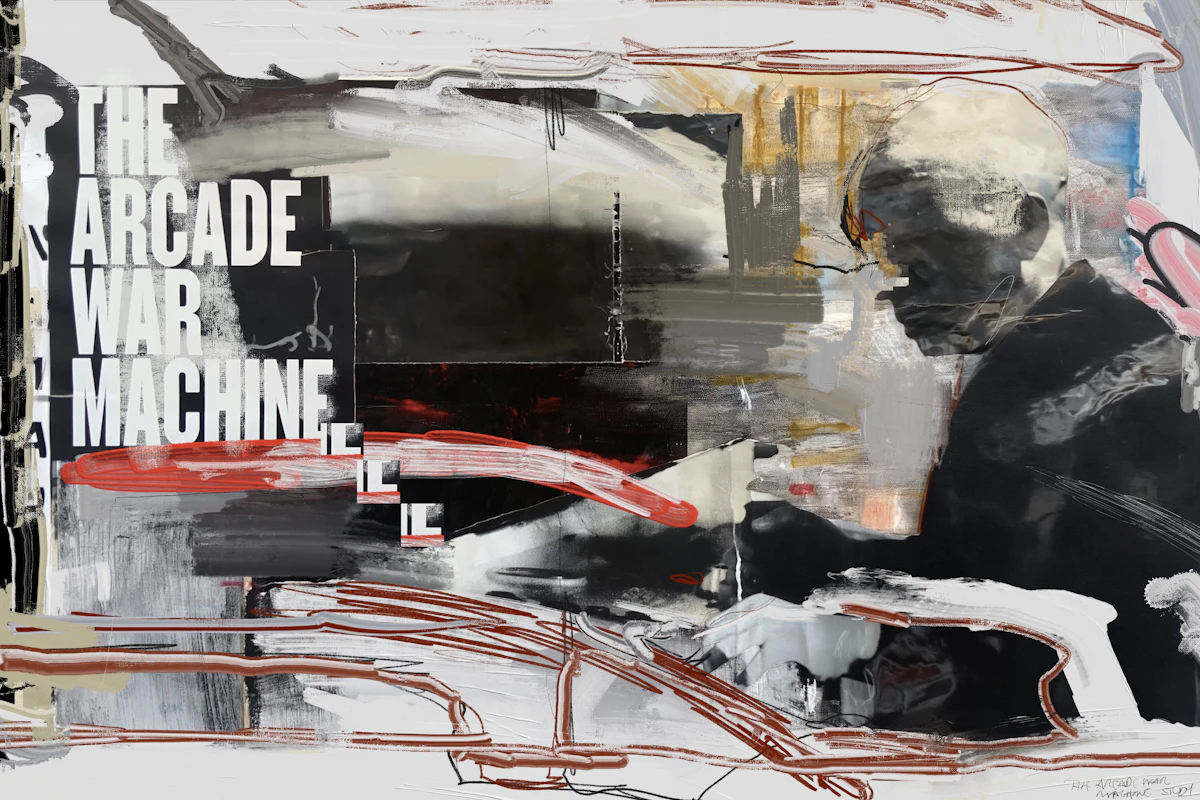
In Harman's latest painting Arcade Drone Machine, viewers are immersed in a captivating narrative that weaves together history, politics, and technology. Set against a haunting post-apocalyptic landscape, the artwork resonates with the fragility of human civilizations and their achievements.
Central to the composition is an almost prosthetic, AI-like representation of President Joe Biden. This uncanny portrayal accentuates the ever-blurring lines between human and machine, authentic and synthetic. Nearby, a faded poster of ex-President Ronald Reagan observes with palpable disapproval, highlighting a jarring contrast between two political epochs: one credited with de-escalating Cold War animosities, and the other seemingly on the precipice of a renewed global standoff.
The aged, rusted arcade machine stands not just as a testament to gaming nostalgia, but as an eerie reminder of the stakes at play during geopolitical confrontations. Its screen, bearing the image of a pixelated mushroom cloud, is a chilling symbol of nuclear ramifications. Yet, it's the machine's controls, adorned with multiple "big red buttons," that deepen the narrative. These buttons, synonymous with the potential to unleash devastation, evoke memories of the precarious balance of power during the Cold War. They emphasize the omnipresent, daunting responsibility shouldered by leaders and the potential calamity just a press away. Harman's use of digital paint, enhanced by AI techniques, lends an arresting depth and texture to this tableau, creating a scene that's as intricate as it is evocative.
With glitching drones hovering in the backdrop, Harman pushes viewers to question the boundaries of reality. Are these drones mere facets of a digital simulation, or are they foreshadowing a not-so-distant, technologically dominated future? Through Arcade Drone Machine, Harman beckons viewers to engage in introspection about our shared past, the trajectory of our present, and the choices that will shape our future.



 0xe...653