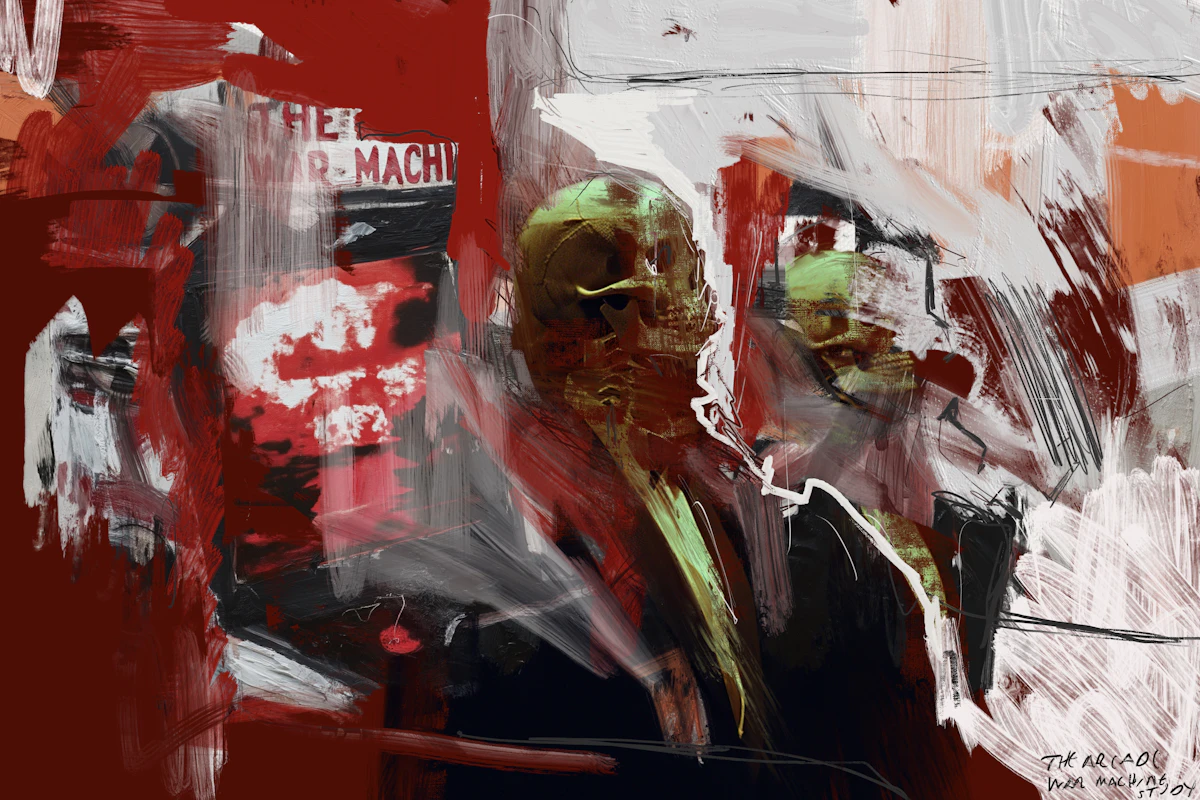
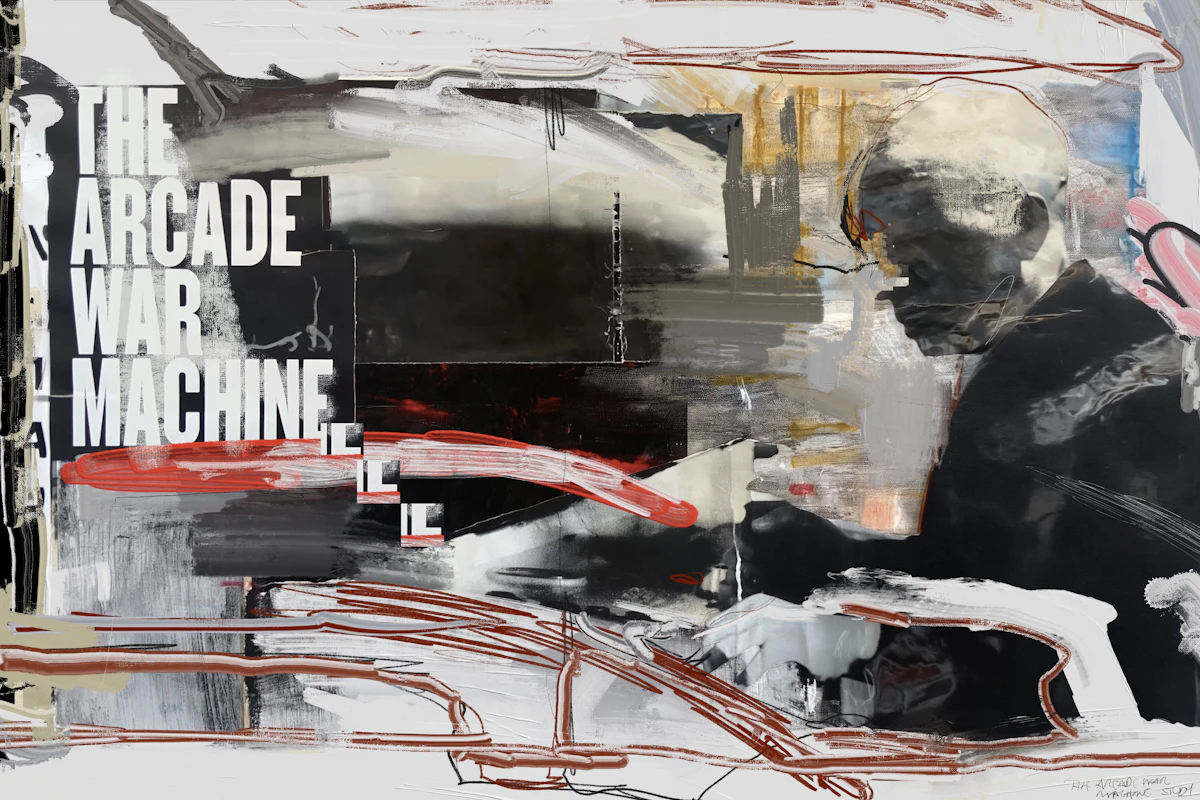
The latest painting from "The 10th E State" series, titled "Factory Orators," immerses us in the enigmatic domain of corporate clout over the individual's existential landscape. It presents us with a pair of enigmatic executives, resembling two sides of the same coin, poised outside a factory setting. With one figure prominently wielding a megaphone, his declaration about a novel pharmaceutical entity carries the weight of orchestrated influence. The syringe, rudimentarily inscribed on the wall, looms as a symbol that is at once a beacon of medicinal advancement and a mark of potential dominance.
The ambiance of the image is fraught with deliberate messaging, the surroundings hinting at dark velvet drapes and a future tinged with dystopia. These figures seem not just to address the unseen workforce within the factory's metallic embrace but also to enact a narrative for an audience that extends far beyond the immediate vicinity. It feels as though we have intercepted a transmission already in progress, a piece of communication designed to shape the minds of "The 10th E State" populace—a script woven by the influential elite, where each word and visual element is strategically chosen to influence and sculpt thought.
Here, we are confronted with a compelling quandary: Is what unfolds before us a genuine showcase of ingenuity, or rather a carefully staged veil that conceals the realities of exploitation? The work invites reflection rather than dictating a perspective, coaxing the viewer to consider what constitutes authenticity in an era where realities are constructed by those who hold power. It speaks to the paradox of innovation: in the very process of crafting hope, there might simultaneously be the creation of constraints.



 0xe...653