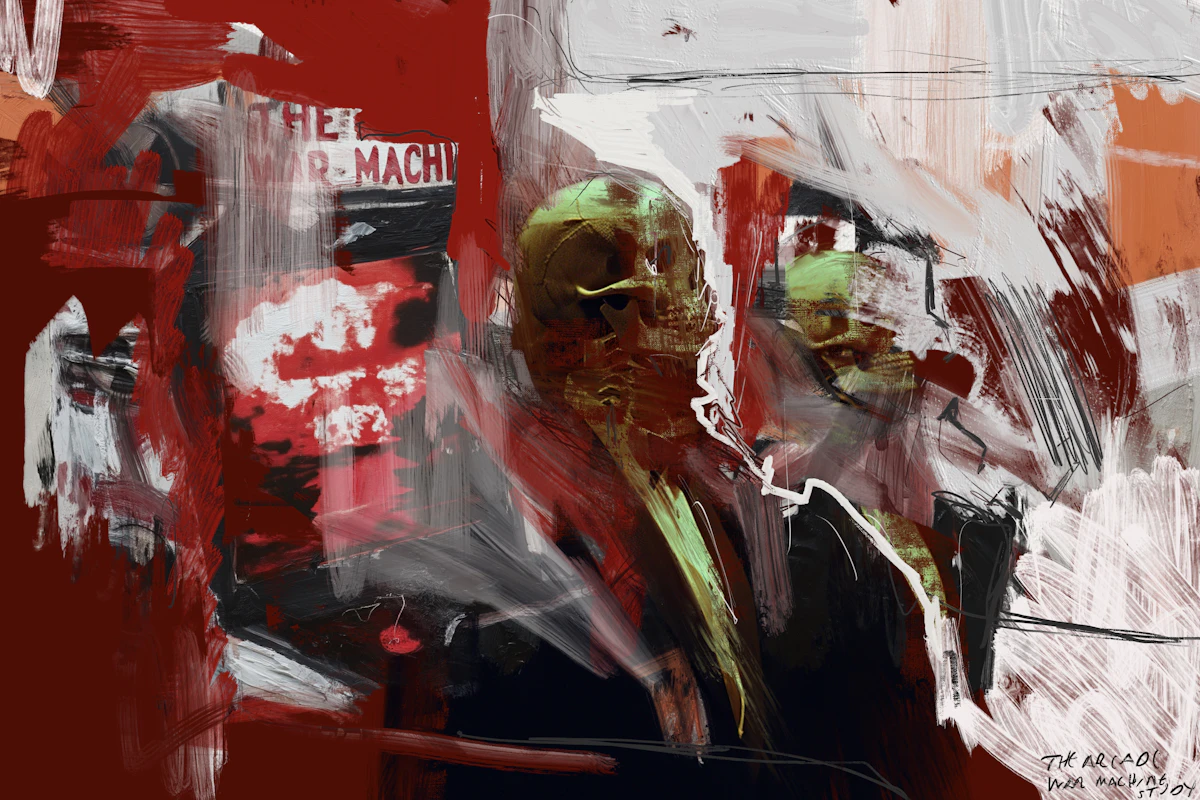
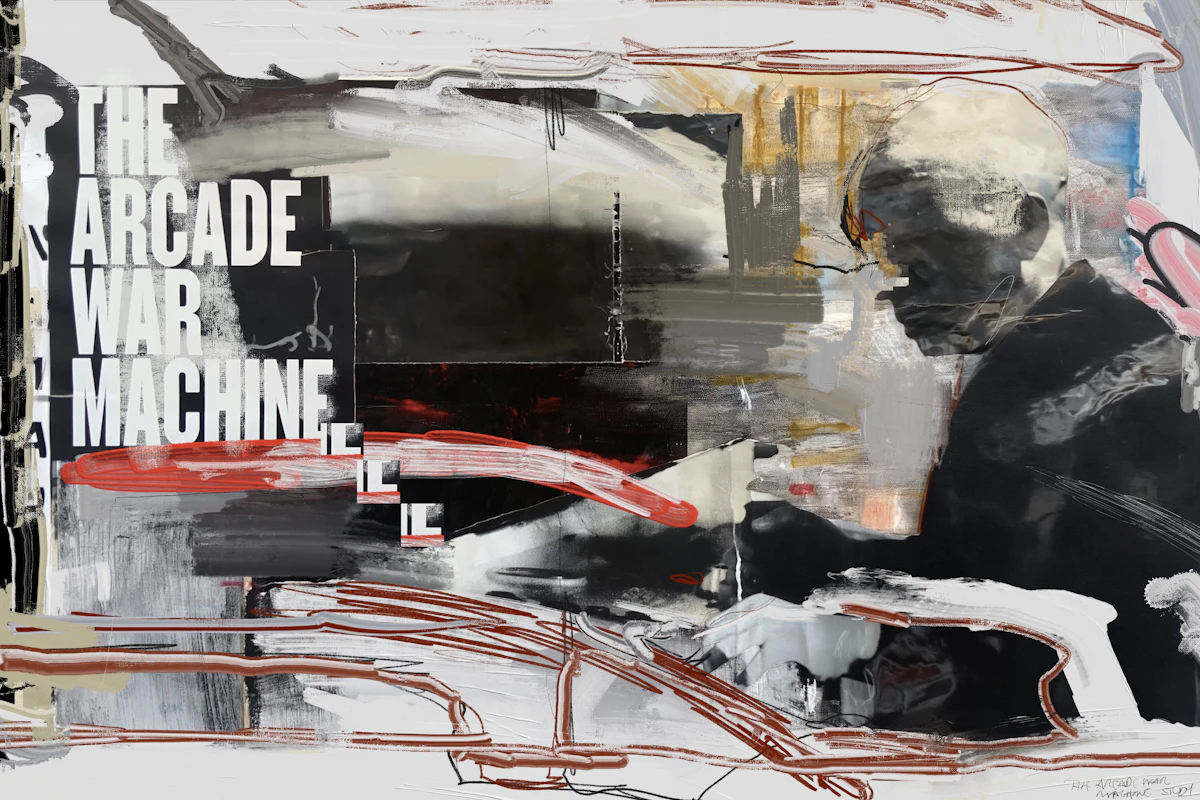
In The War Machine - Mr. Atomic, Harman deftly weaves a haunting tableau that resonates with the deep-seated anxieties of our time. The figure at the center, a shadowy, nefarious man seated with an unnerving calm, seems to embody the cold detachment of those who hold the power to unleash devastation. The subtle contours of his form, almost subsumed by the swirling abstraction around him, suggest a figure both present and elusive, a specter of authority whose identity is as opaque as the moral void he occupies.
Behind this enigmatic figure, the nebulous cloud of an atomic explosion looms—a chilling reminder of the latent destructive forces that sit at the fingertips of those who steer the course of history. This cloud, however, is not rendered with the fiery violence typical of such imagery but with a ghostly palette of smeared, almost ethereal hues, suggesting a future where the horrors of the past have been absorbed into the very fabric of our collective consciousness. It is as if the painting is whispering that the true terror lies not in the spectacle of destruction, but in its normalization, its relegation to the background of our modern existence.
Harman's use of AI and digital painting techniques adds a profound layer of existential inquiry to the work. The digital brushstrokes, at once precise and chaotic, mirror the dual nature of technology as both a tool of creation and a harbinger of potential annihilation. The abstract elements, seemingly random yet meticulously placed, evoke the unpredictable, uncontrollable nature of the forces at play in a world increasingly governed by algorithms and artificial intelligence. This fusion of traditional and digital media challenges the viewer to confront the accelerating pace of technological advancement, asking whether we are truly masters of our creations, or merely passengers on a vessel hurtling towards an uncertain future.
The War Machine - Mr. Atomic is a stark, unsettling meditation on power, technology, and the fragility of human agency. It compels us to question the nature of the individuals and systems that wield such immense power and to consider the thin line between progress and peril. Harman's work stands as a powerful commentary on the existential risks of our age, urging a reckoning with the forces we have unleashed and the figures who may yet shape our destiny.



 0xe...653