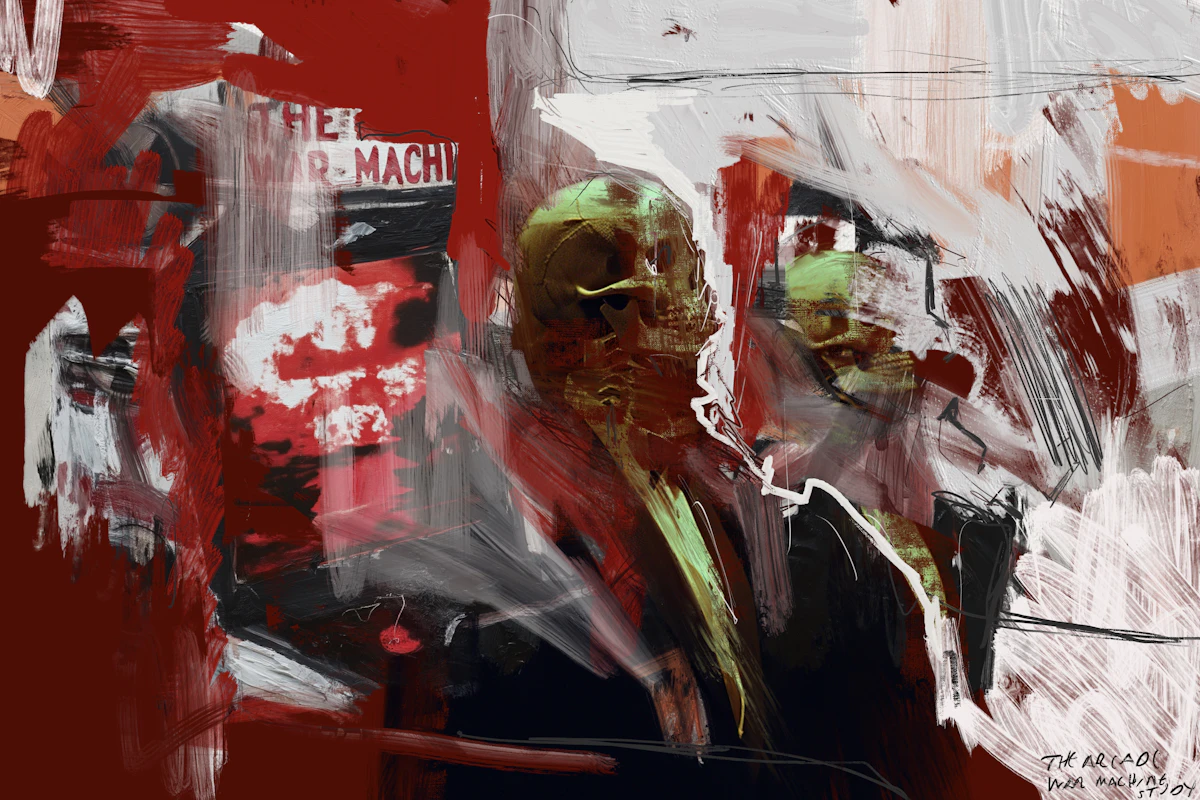
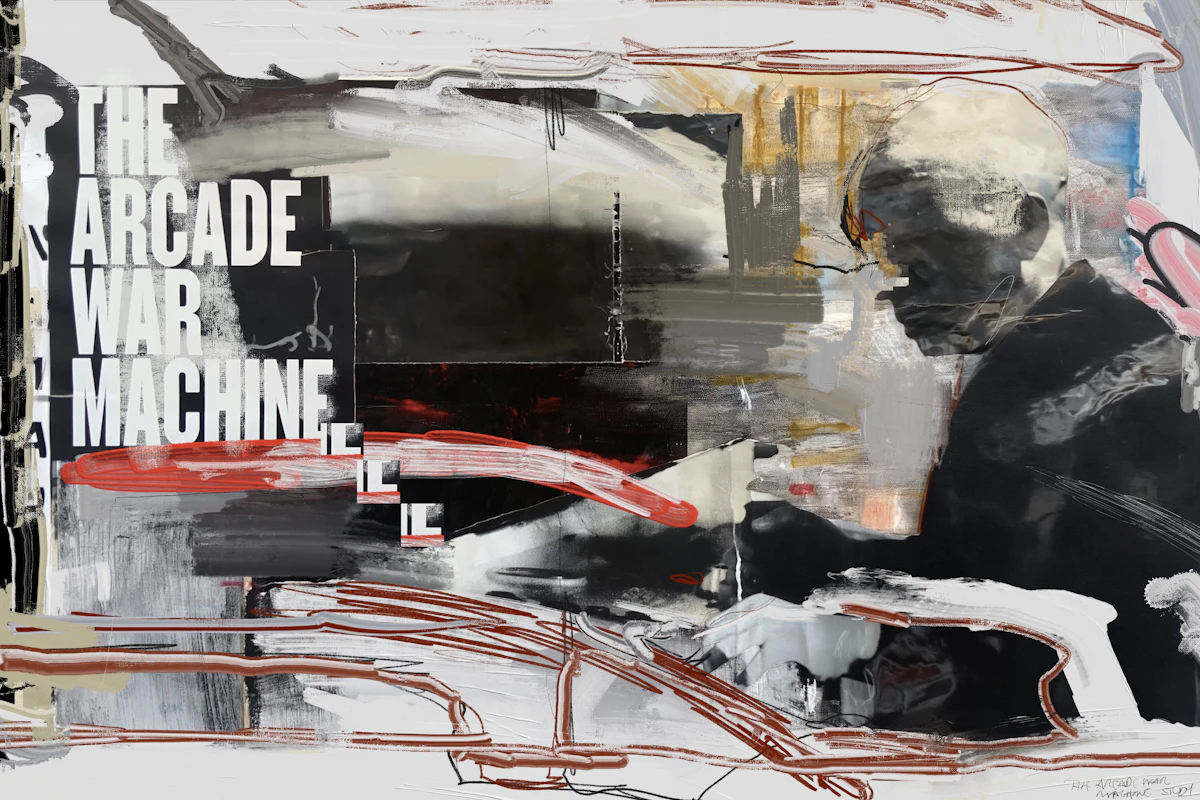
In Arcade Charlie - The War Machine, we are thrust into the mind of a Neocon who gamifies global conflict with reckless glee. Charlie, a distorted figure of power and detachment, merges into a chaotic burst of abstract color and energy, his laugh bleeding into the whirlwind of strokes that distort reality. At the center of this warped vision is an arcade machine marked The War Machine, a relic of 1980s nostalgia, but now a disturbing metaphor for modern warfare. Nuclear explosions rage behind him like sinister backdrops to his personal game, the warm reds and yellows of destruction merging almost too comfortably with the neon hues of the game’s flashing screen. This disorienting combination of play and violence creates a nauseating dissonance.
Charlie becomes the embodiment of a Neocon mentality, where war is reduced to a sport, and destruction is measured in high scores rather than lives lost. The vibrant brushstrokes evoke an unsettling blend of excitement and chaos, forcing us to confront how modern warfare, filtered through technology, becomes dehumanized and abstract. The joystick, the screen, the flashing lights—these are no longer tools for entertainment but mechanisms of control, trivializing devastation to the level of a game. Charlie's grotesque grin signals a profound disconnection from the real consequences of his actions, a commentary on how power in the digital age detaches its wielders from the human toll of their decisions. In this work, The War Machine critiques the dangerous allure of this detachment, where the line between play and catastrophe vanishes entirely.



 0xe...653