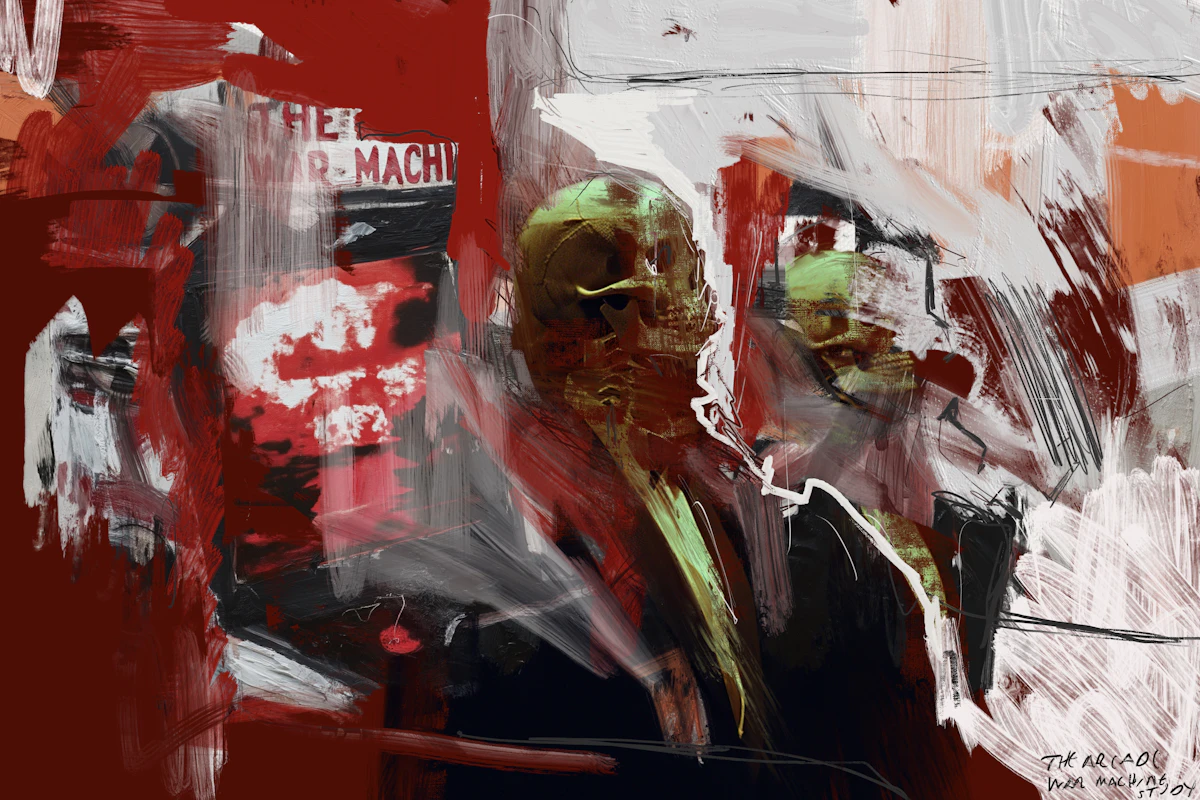
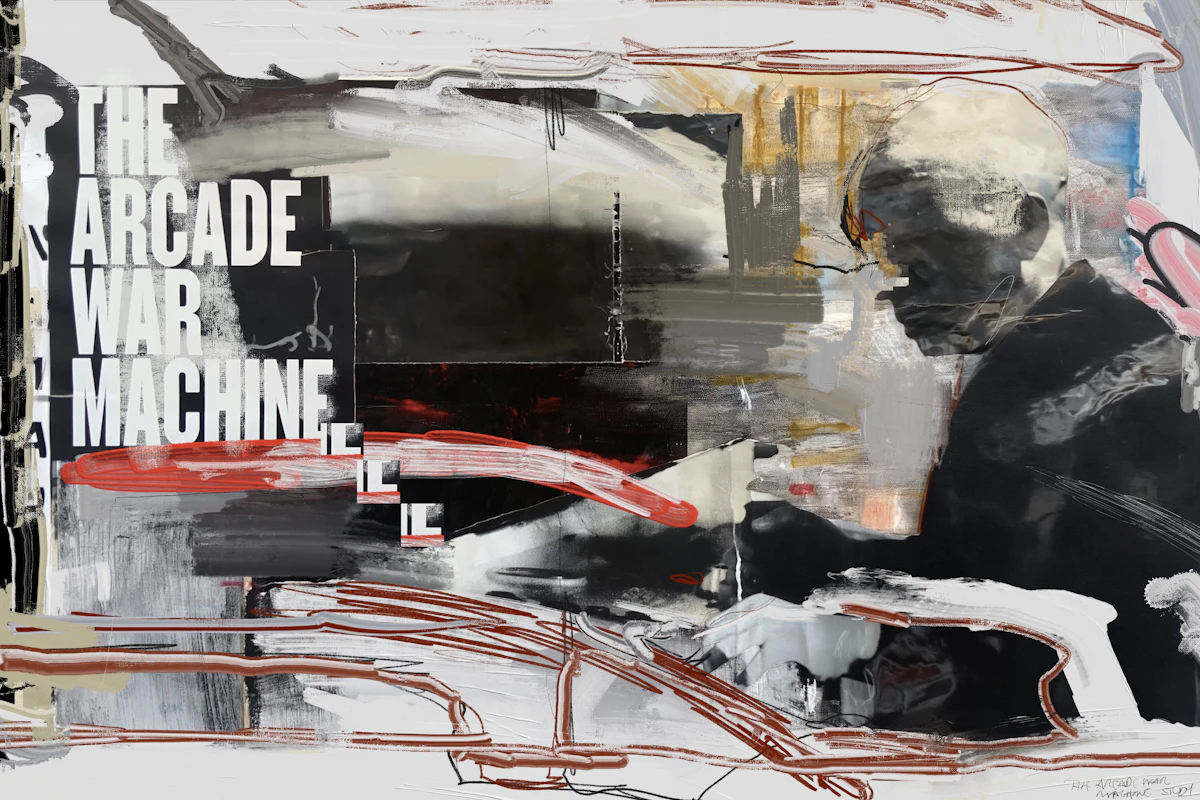
Harman's latest painting, Snake Oil, from the Bathers on the Seine series, confronts the viewer with a scene thick with layers of existential dread and contemporary critique. The painting masterfully juxtaposes the gloss of modern wealth against the raw, untamed energies of disillusioned youth in Paris. Here, two bourgeois men—hollow figures masked in privilege—emerge from their sleek luxury yacht on the Seine, attempting to hawk their gleaming, miraculous product to a crowd of skeptical young Parisians. The object in question, this supposed "liquid gold," holds within it a sinister promise, echoing the age-old tradition of the snake oil salesman—those nefarious figures who, in the face of desperation, sold miracles in a bottle, preying on hope, vulnerability, and the desire for transformation.
But in Snake Oil, Harman taps into something deeper. The very notion of transformation becomes suspect. The men peddling the liquid gold symbolize a broader, more insidious trend of commodification in the age of late capitalism: a system where even dreams are sold back to the masses in neatly packaged vials. This painting resonates on multiple levels, posing essential questions about authenticity, the false promises of wealth, and the illusions of power. The men in their tailored suits, representing corporate greed and technocratic dominance, stand against a backdrop of faded grandeur, invoking a crumbling Paris that has long been stripped of its soul. The youths, shrouded in darkness, symbolize a generation well-aware of the hoaxes that built the empires surrounding them—no longer willing to buy into the myths of easy fortune and instant success.
Snake Oil is not simply a snapshot of an absurd transaction; it is a mirror reflecting the deep crises of meaning in today's society. Harman’s delicate, almost fragmented brushstrokes suggest a world on the brink of collapse—each figure partially disintegrated into the scene, as though caught between reality and a fleeting illusion. The Seine itself, long a symbol of history and romance, now becomes the setting for an economic transaction fraught with hollow promises. This painting asks the viewer to contemplate the nature of these modern-day alchemists, who, instead of offering salvation, traffic in manipulation and deceit.
At its core, Snake Oil speaks to the cyclical nature of history—where the snake oil salesman never truly disappears, but simply dons a new guise, emerging in times of uncertainty to exploit our deepest insecurities. Harman’s work is a masterful commentary on our modern condition, blending the timeless with the urgent. His portrayal of these snake oil men teeters on the edge of parody and tragedy, rendering them as relics of a failed ideology that continues to reassert itself in new, more dangerous forms.



 0xe...653