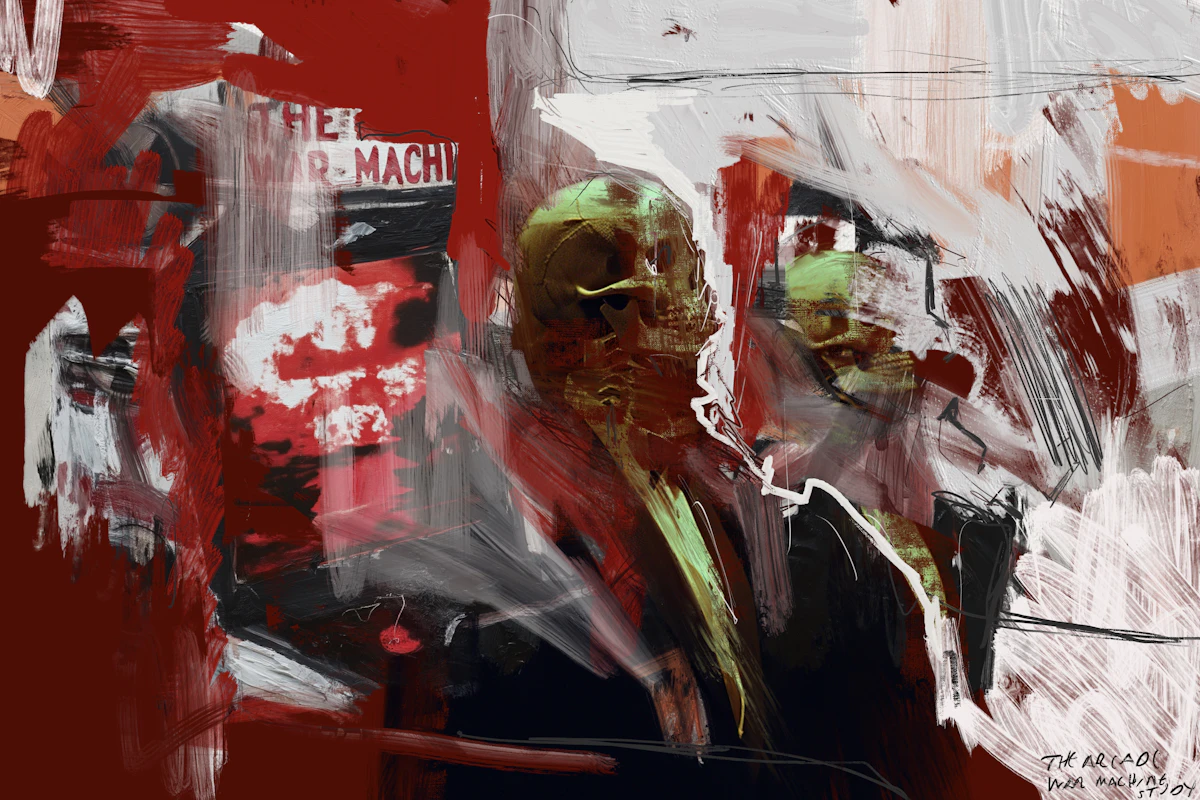
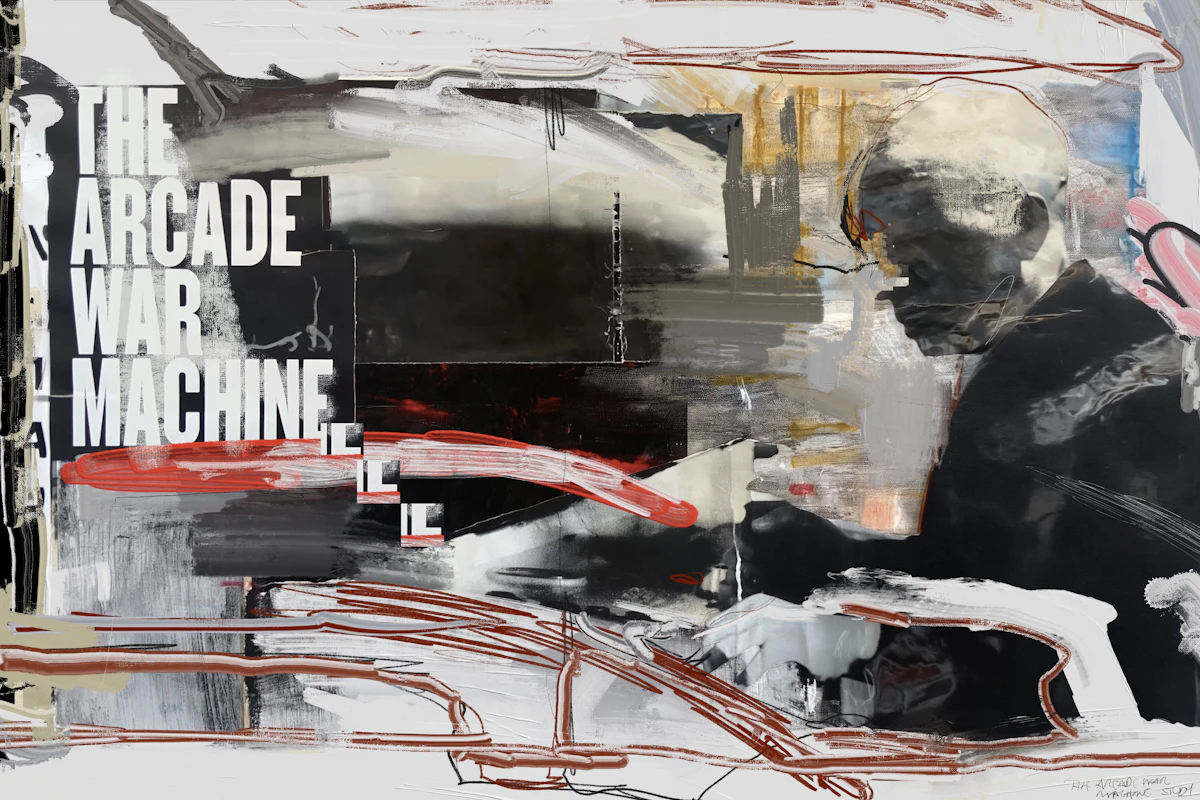
Bureaucrats Playtime is the latest painting in The War Machine series, capturing the essence of a disturbing yet familiar intersection between leisure and devastation. In this chilling scene, a group of bureaucrats, seemingly detached from the harsh realities they orchestrate, stand gathered in front of a glowing arcade machine. Their wide grins and corporate attire contrast grotesquely with their reflective sunglasses, which mirror a distorted image of the flags of nations they profit from, transforming their faces into abstract canvases of corporate greed.
The title itself-Bureaucrats Playtime-drips with irony. These are not the traditional purveyors of fun but the quiet profiteers of destruction. The arcade game they play is no ordinary distraction. The game is war, fueled by policies and profits. Their joy comes not from victory or defeat but from the bloodless abstraction of a joystick and buttons—a sanitized version of conflict where only numbers rise, and human costs remain distant.
The painting speaks to the cyclical nature of power, where bureaucracy is not simply a neutral body of governance but the grease in the wheels of war profiteering. In the background, the Empire State Building looms, shrouded in smog, a veiled yet omnipresent symbol of capitalist dominance. The arcade’s neon sign, subtly bearing the words "The War Machine," burns above them, a garish reminder of the industries that thrive on human conflict.
The abstract brushstrokes that smudge their faces into obscurity suggest a moral and existential blur-who are these men behind the reflective glasses? Are they even people anymore, or just avatars of profit? The vibrant colors that mark their grins betray no sense of self-awareness, only the hollow satisfaction that comes from winning a game whose real consequences they will never face.
This work questions the nature of play in the bureaucratic age. In the hands of the few, even play becomes a vehicle for destruction. The painting’s existential undertones invite the viewer to grapple with their own complicity in systems that reduce war to a mere amusement, obscuring the human lives caught in the crosshairs of policy and profit.
Harman's brush shreds the canvas like the very fabric of moral ambiguity, leaving us to wonder: Are these men playing, or are we all part of this game?



 0xe...653