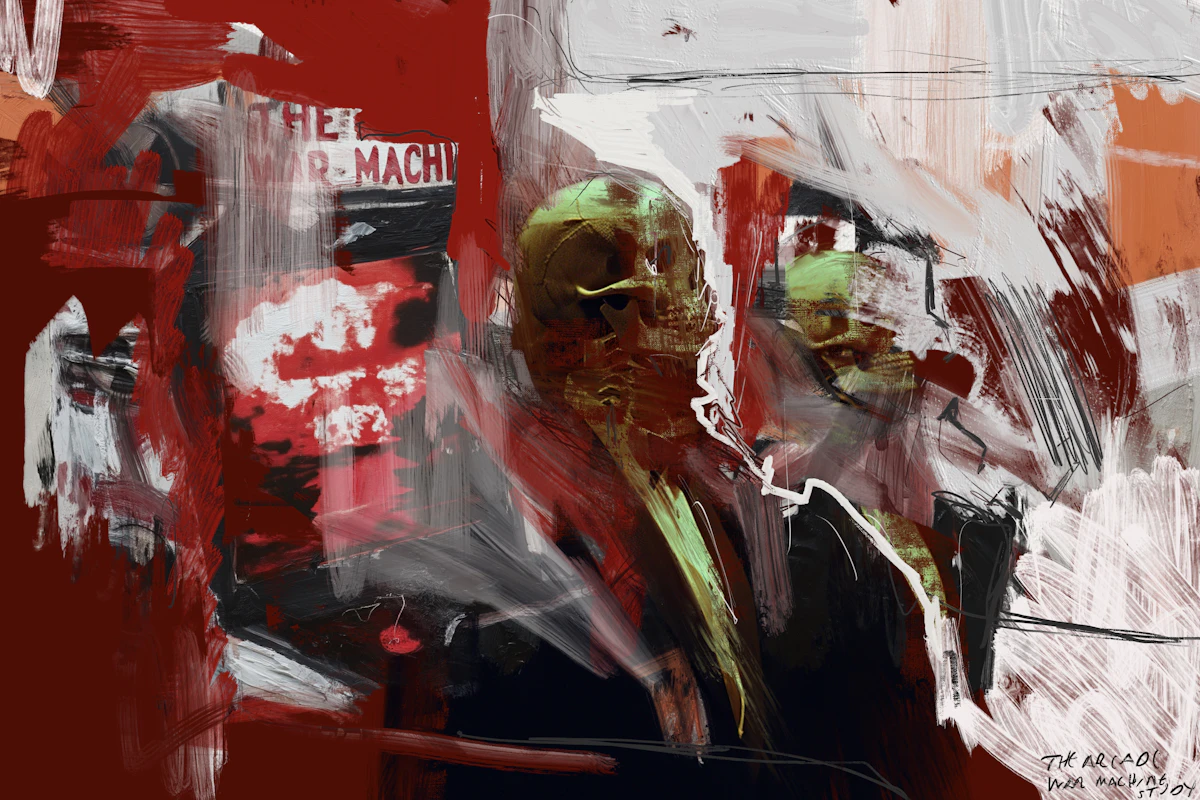
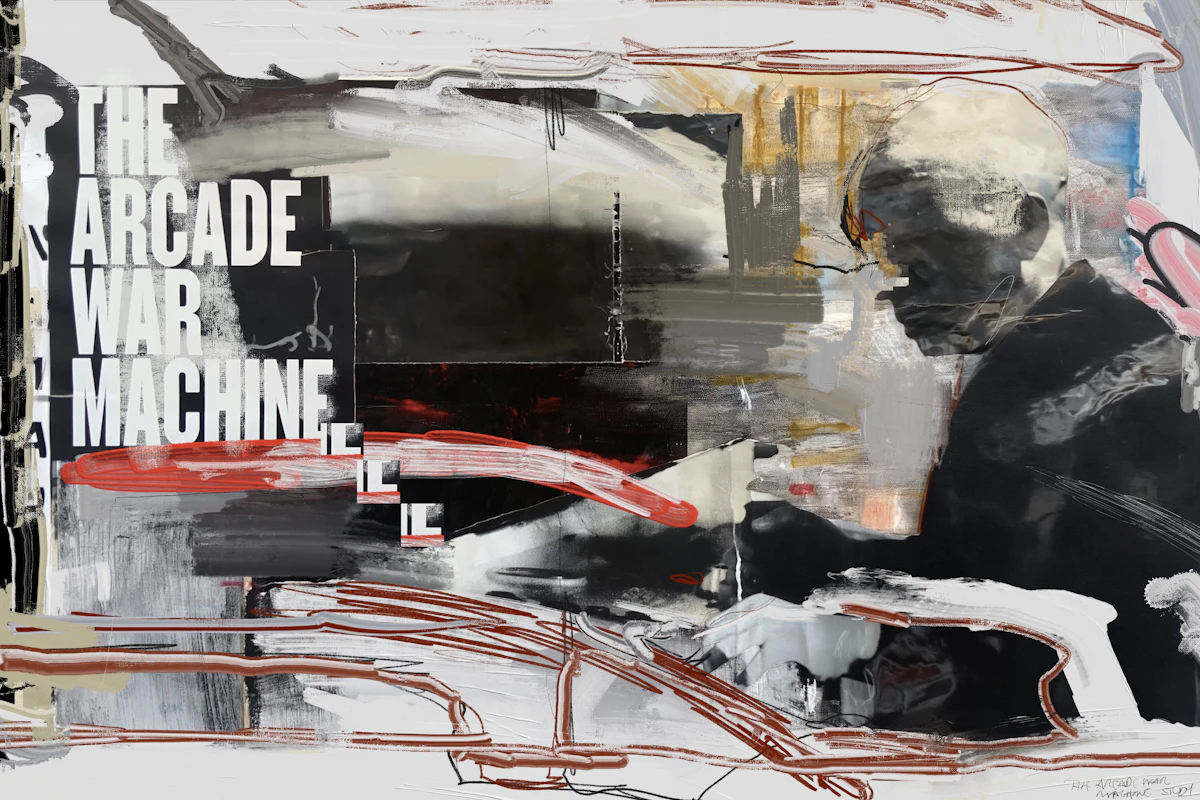
In VC or not VC, that is the NFT Question, we are plunged into a dimly lit world of corporate gluttony, where a cabal of venture capitalists, dressed in tuxedos, feast upon what’s left of the NFT space's democratizing ideals. The banquet table, with its distorted and chaotic spread, reflects the grotesque consumption of the art world itself—a once vibrant arena, now reduced to a buffet of exclusivity, where access to creativity is determined by the size of your crypto wallet. The screen, emblazoned with a twisted Shakespearean motif, mocks the artists who are left outside, their visions suffocated under the weight of institutional money.
Through layers of glitchy abstraction, the painting deftly critiques the very VC apparatus that was meant to "support" the space but instead has become a gatekeeper. Those who once championed decentralization now sip champagne, discussing which artists to elevate, which movements to exploit. This dinner isn’t just a meal; it’s a metaphor for control, a moment in time where the artistic revolution was supposed to thrive but instead has become a high-stakes game for the few.
The NFT world, teeming with utopian promise, finds itself, like the twisted figures in the painting, caught in existential inertia. What was meant to liberate creators from the galleries has become a dystopian replay of the very structures they sought to escape—preserved now in the glitchy brushstrokes of this disturbing dinner party tableau.
In this moment, we ask ourselves: is this a new Renaissance or the final meal before the curtain falls on true artistic decentralization? The figures in VC or not VC seem to know the answer, but as with all things governed by capital, they aren't sharing it with us.



 0xe...653