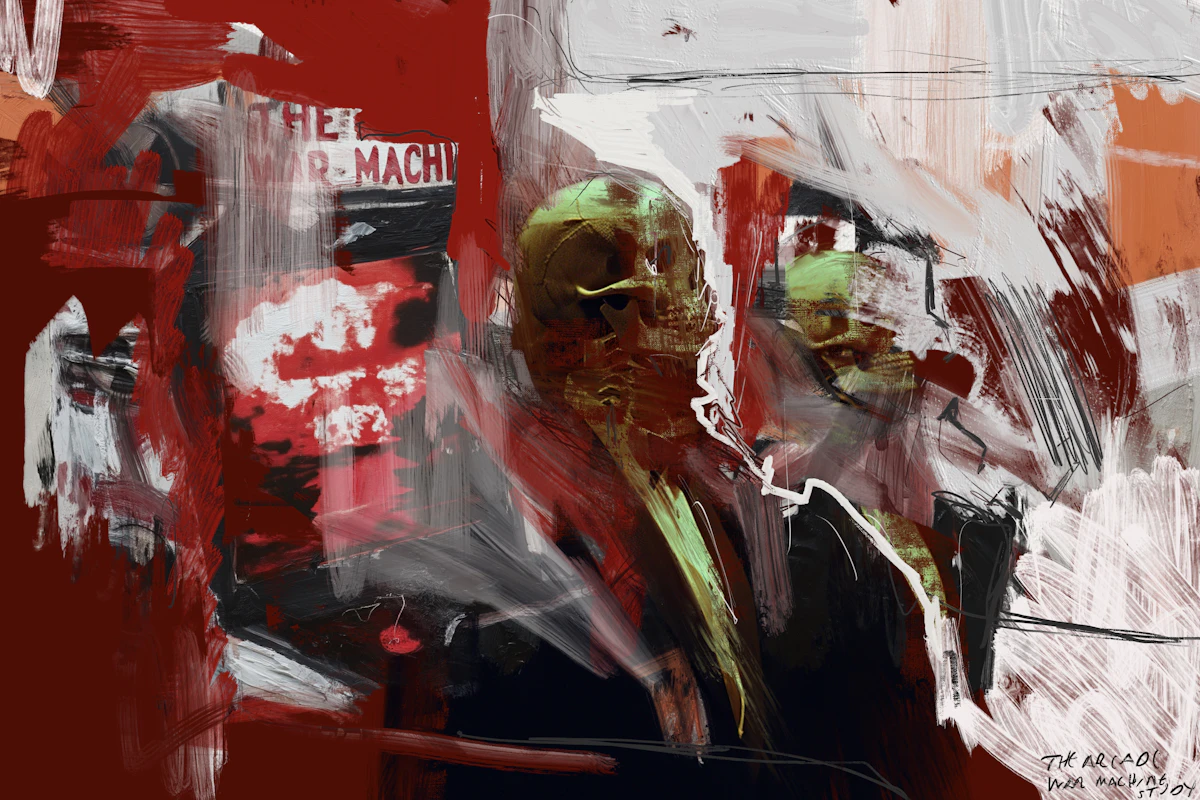
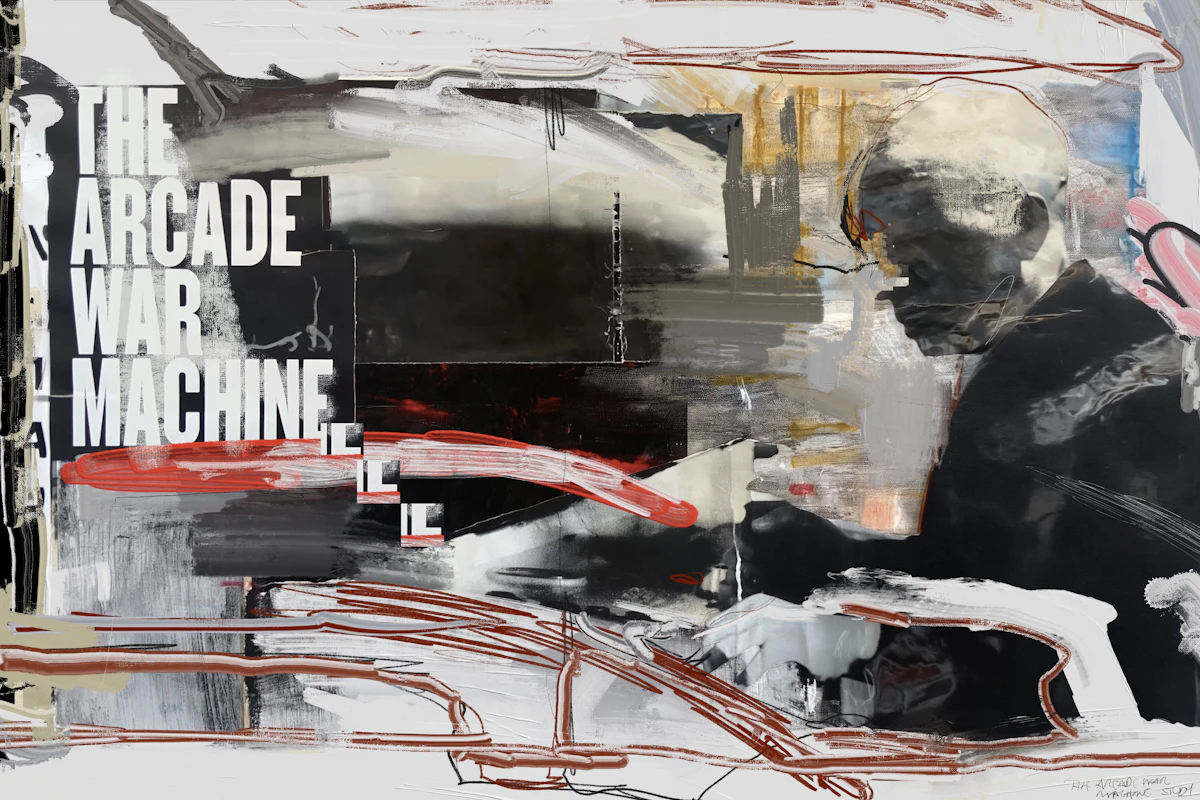
In this technocratic town, the bourgeoisie gather under chandeliers of algorithmic light, dining on banquets of refinement, meta-luxury plated in data, etiquette rehearsed through code. Their visors gleam like sacred relics, filtering out the stench of the streets below. They chew on the aesthetics of progress while the citizens choke on packets of bugs, sold to them as sustainability.
The Connoisseur Portrait captures one of these chosen feasters mid-transfiguration, his face melting between elegance and entropy, his smile flickering beneath the visor like a corrupted file. What once signified culture now trembles with the anxiety of obsolescence.
The painting does not accuse; it observes the ritual. The connoisseur’s decay is slow, luxurious, the kind of ruin that comes with privilege. His palate, trained to detect the subtlest notes of vintage and virtue, now savors only the taste of his own disappearance.
Here, refinement is the final narcotic. The banquet continues as the town burns not with fire, but with the quiet hum of automation. And so, FEAST becomes prophecy: a portrait of a class still eating while the world beneath their table starves on ideology and insects.



 0xe...653