The age once raised cathedrals toward heaven. Ours erects inflatable rockets.
In this painting, Elon Musk appears not simply as an entrepreneur or engineer, but as a protagonist in a new mythology, one where ambition has replaced faith and innovation has become the preferred language of salvation. Beneath towering inflatable Teslas and rockets, he stands as both prophet and performer, addressing a future that seems perpetually on the verge of arrival.
The inflatable forms dominate the composition like temporary monuments. They are absurd, weightless idols, objects designed to symbolize permanence, progress, and conquest, yet rendered here as fragile skins sustained only by air. The rockets promise escape while remaining tethered to the earth. The cars promise liberation while sitting motionless beneath them. Their scale gives them authority, their emptiness reveals their vulnerability.
The painting occupies a strange territory between triumph and collapse, where spectacle becomes belief and belief becomes infrastructure. Musk speaks into the void as if attempting to persuade the future itself to materialize. Beside him, a figure turns away, embodying the eternal tension between conviction and doubt, devotion and skepticism.
What emerges is a portrait of a civilization intoxicated by projection. The larger the promise, the more irresistible it becomes. The inflatables serve as symbols of a culture increasingly invested in narratives rather than realities, where valuation eclipses value and perception acquires greater weight than substance. Their absurdity is not a criticism but a revelation. They expose the mechanisms through which contemporary society manufactures hope.
Yet the work resists cynicism. There is something undeniably heroic in its atmosphere. The desire to reinvent mobility, to colonize distant worlds, to challenge the limits of what is possible remains among humanity's most powerful creative impulses. Every age invents its visionaries. Every age builds monuments to its dreams.
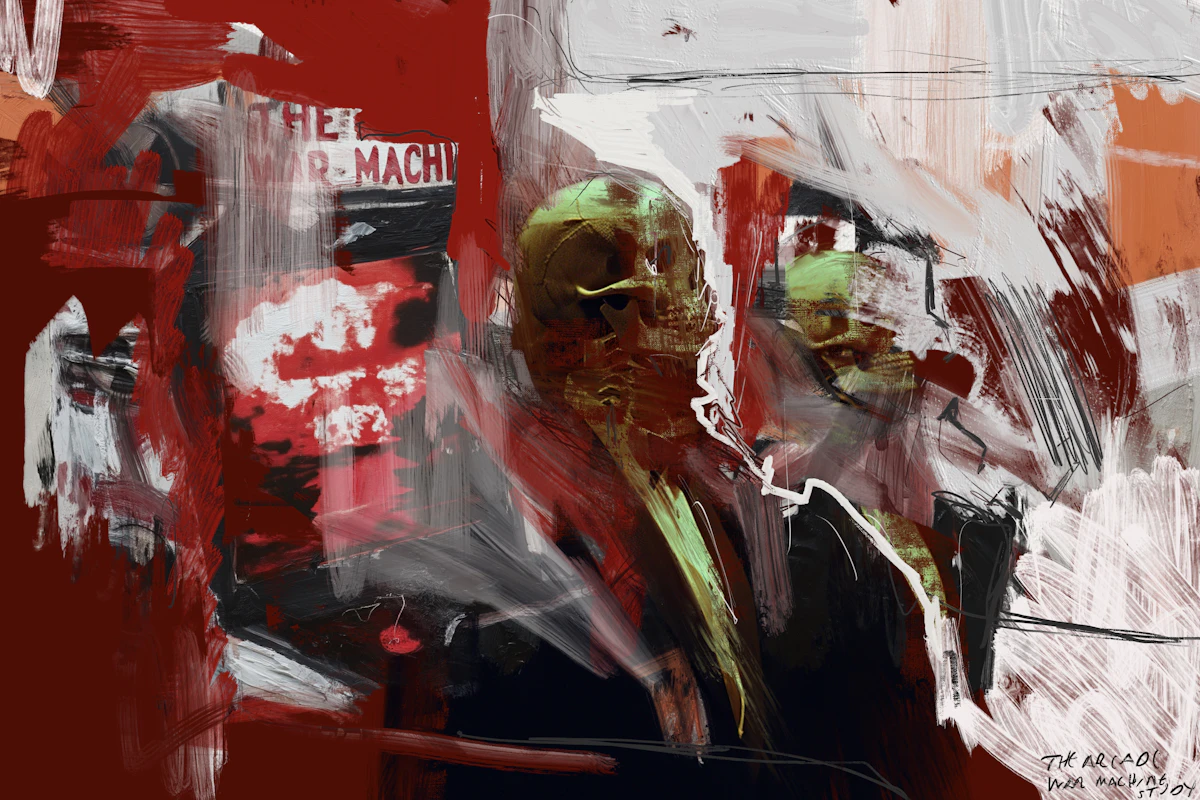
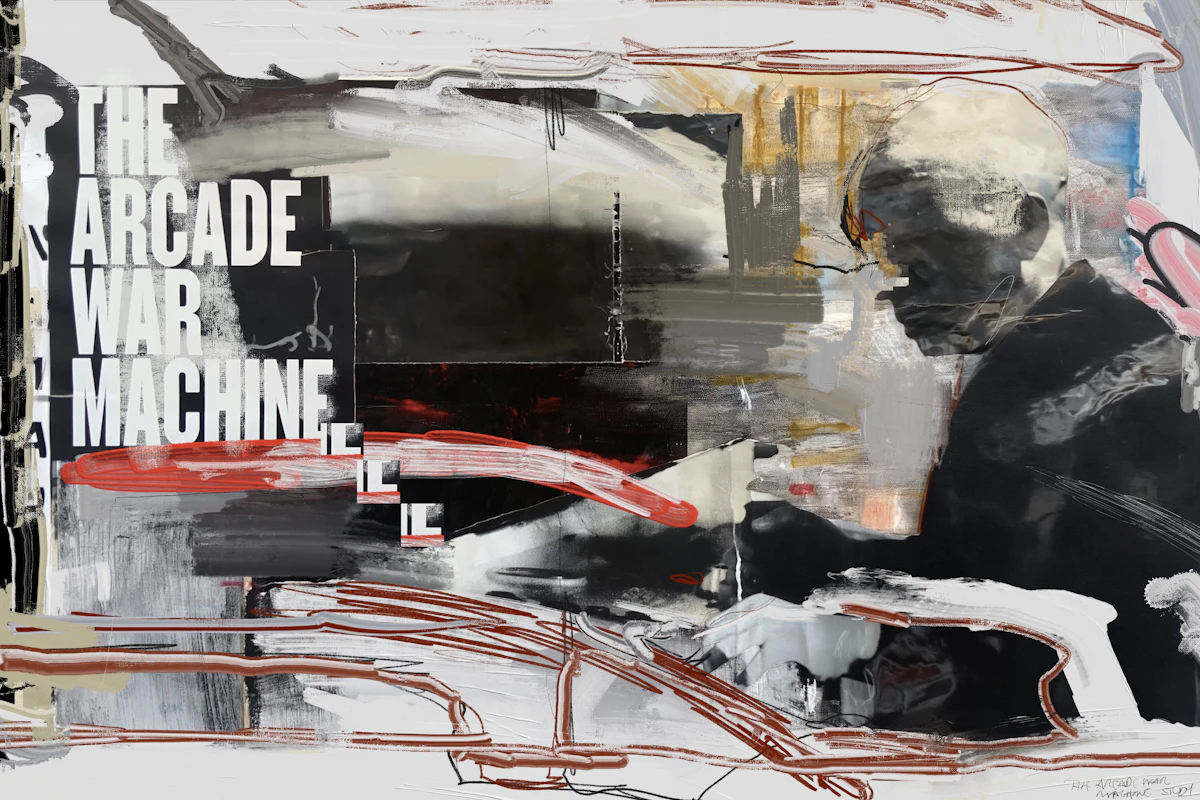
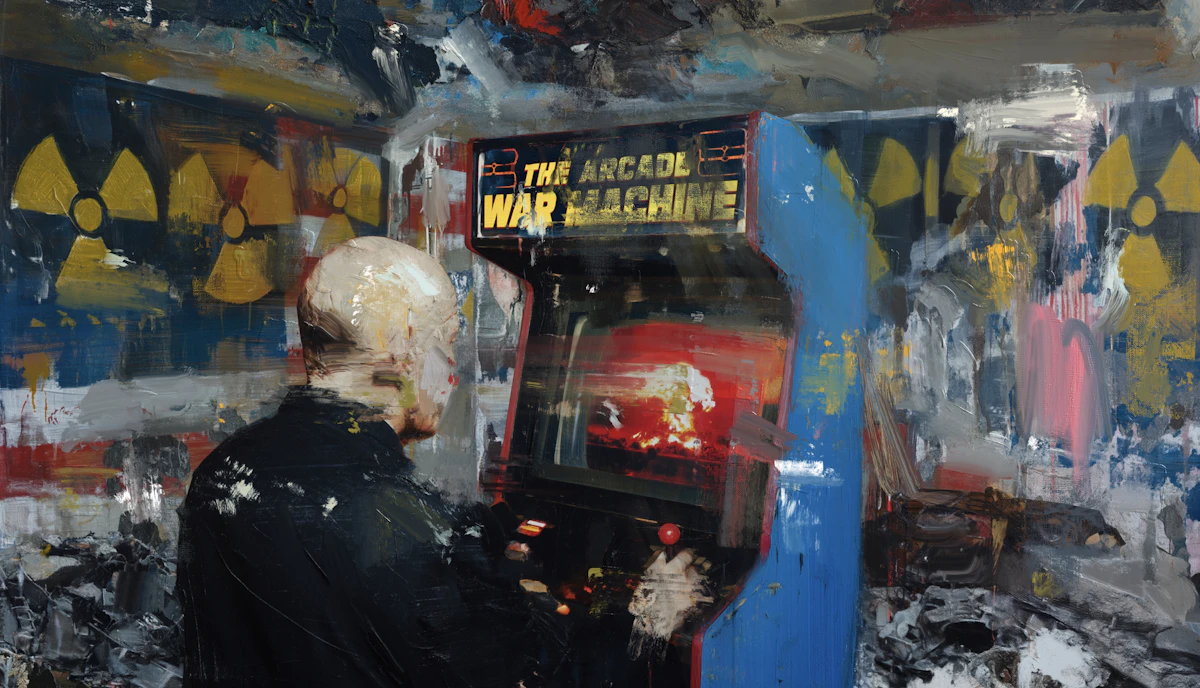
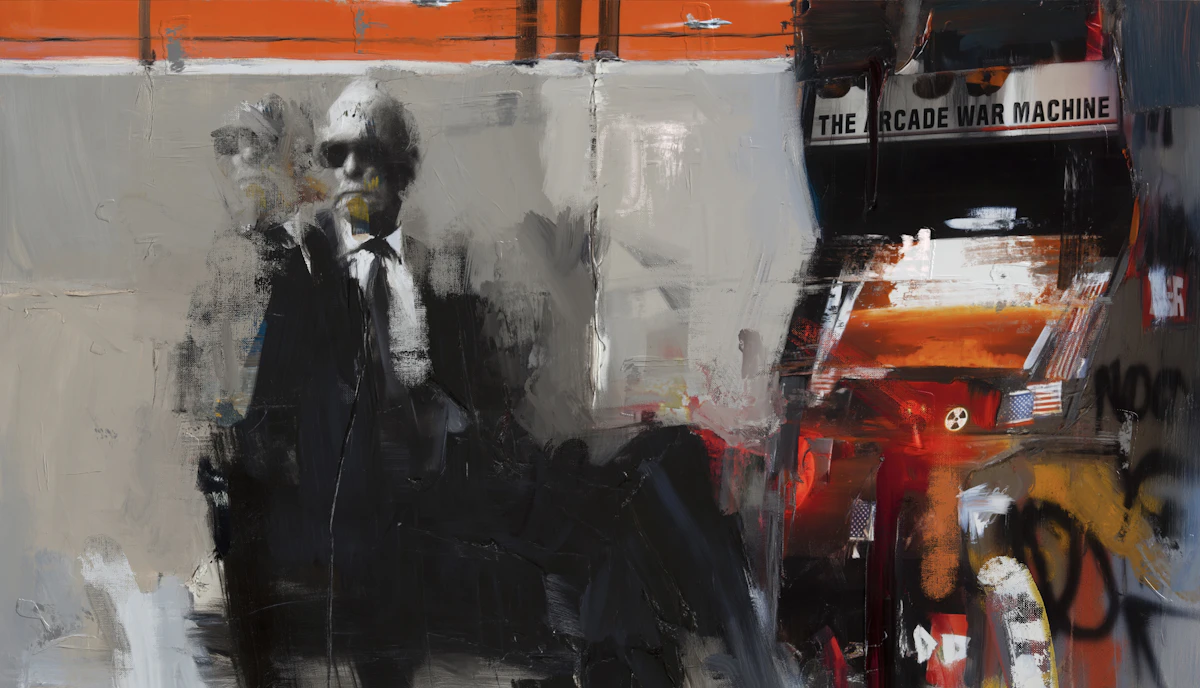
Through violent passages of crimson, black, and white, the painting captures the unstable energy of the present moment. The rockets point toward the stars, yet their surfaces wrinkle and fold. The Teslas gleam with the promise of progress, yet dissolve into gestural brushwork. Everything appears caught in a state of becoming, magnificent, uncertain, and unfinished.
Ultimately, this work is less about Elon Musk than about a civilization searching for meaning through technology. It asks what happens when innovation inherits the role once occupied by religion, when engineers become mythic figures, and when the future itself becomes a commodity to be marketed.
The future is presented not as a destination but as a performance, an inflatable spectacle illuminated by spotlights, hovering somewhere between revelation and illusion. Beneath it all remains the same unanswered question that has haunted every generation, whether our grandest inventions bring us closer to freedom, or simply provide more elaborate ways of avoiding the silence.



 0xe...653