Every song about the Grail ends the same way: the knight finds it, and the song stops. No one sings what happens next.
This knight rode for years. He crossed rivers that had no names and slept in chapels with no roofs. Old women told him the cup was guarded by dragons. Monks told him it was guarded by sin. A fool at a crossroads told him it was guarded by nothing at all, and laughed.
The fool was right.
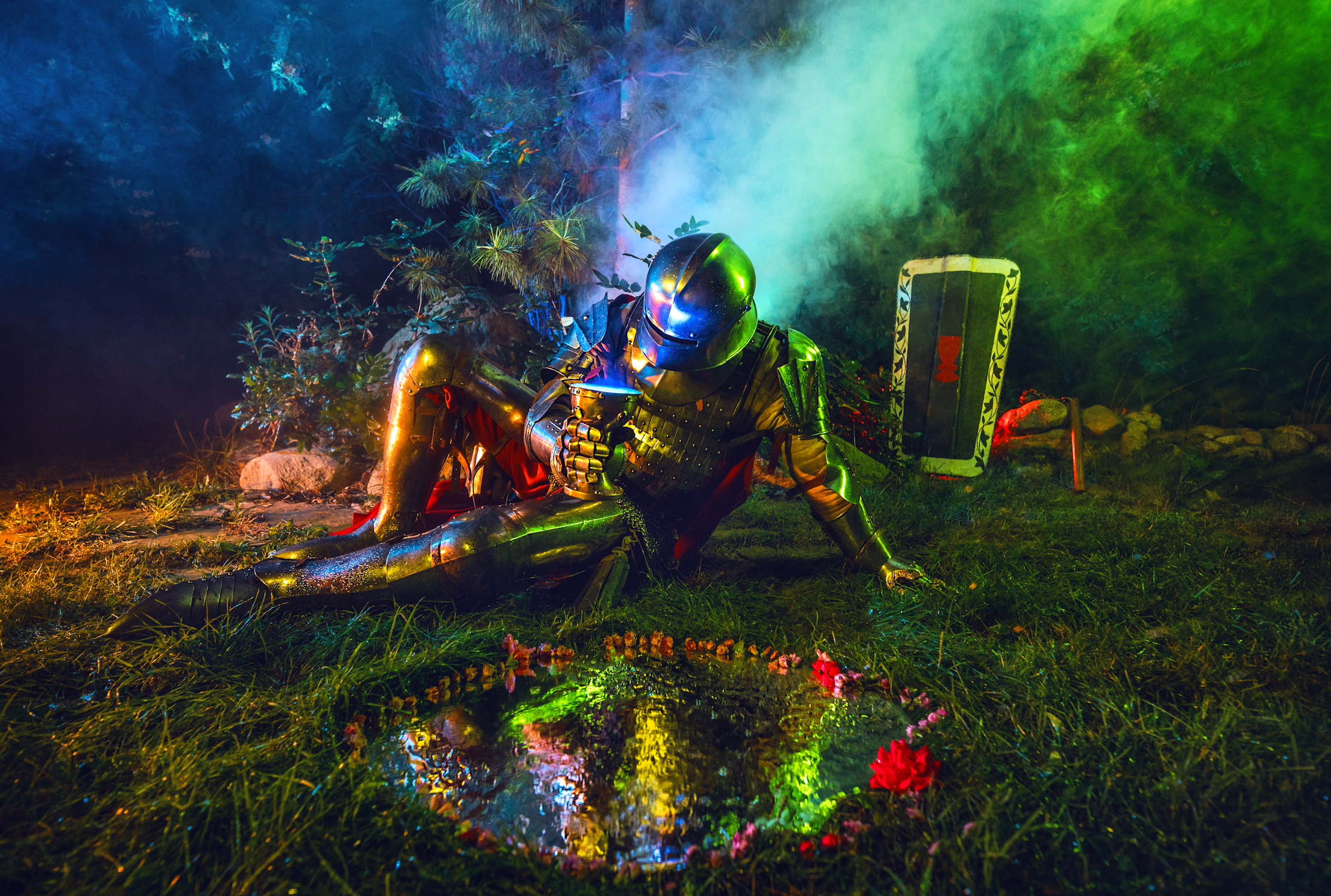
He found it at midnight, between the last night of summer and the first night of autumn, beside a small still pool ringed with petals. He did not kneel. He was too tired for ceremony. He set his morning star against the stones, and beside it his shield, painted with the very cup he had carried on his arm for years without ever holding it. Then he sank onto the grass and drew the cup to his chest.
It was smaller than the songs had promised. It weighed almost nothing. And the light came from inside it, the way light comes from inside a man who has stopped searching. It rose and lit his helm from below, while green smoke drifted through the cedar and the dark firs behind him.
The pool lay at his feet like a mirror, the kind in which every seeker meets his fears. He did not look into it. He looked into the cup.
That is the whole secret of the Grail. The test is over the moment you no longer need your own reflection.
Made at night in the artist's garden, near the pond: a real gem-set chalice, plate armour, shield and morning star from a historical reenactment club, real smoke. The pool is a mirror under a fine spray from a garden hose, its edges hidden in flowers.
Of all the knights who rode out after the Grail, this is the one who reached it. Those who did not remain in the forest, like the Dark Knight.
(Fine Art Photography. Created in September 2024.)